Project Management, Construction Project Management, Law & Ethics
6 Essential Ethics Guidelines for Construction Project Management Success
Introduction
In the world of construction project management, success is not solely measured by the timely completion of a project or staying within budget constraints. Ethical considerations play a pivotal role in determining the true success of construction projects. While the importance of ethics is widely acknowledged, there are specific nuances in the construction industry that often go unnoticed but are critical to ensuring ethical practices.
In this article “6 Essential Ethics Guidelines for Construction Project Management Success”, we will delve into the lesser-discussed yet vital aspects of ethics in construction project management. These principles are not only essential for maintaining high ethical standards but also for enhancing the overall quality and sustainability of construction projects.
Ethical Principles in Project Management
1. Transparency Beyond Surface
Transparency is a cornerstone of ethical project management, but it goes beyond mere disclosure of information. In construction, it’s about providing stakeholders with insights that extend beyond the surface. It involves openly sharing the challenges, risks, and uncertainties associated with the project. Too often, project managers may present an overly optimistic picture, leading to unrealistic expectations and potential ethical breaches.
True transparency means acknowledging potential obstacles and working collaboratively to address them. It’s about being upfront about project limitations, budget constraints, and potential delays, enabling stakeholders to make informed decisions. In essence, it’s not just about sharing data; it’s about fostering an environment of trust and accountability.
2. Ethical Dilemmas in Project Management
Ethical dilemmas are an inevitable part of construction project management. They arise when project managers are faced with conflicting interests or values. These dilemmas can be particularly challenging in the construction industry, where competing priorities, such as cost-saving and safety, often collide.
Addressing ethical dilemmas requires a thoughtful and principled approach. Project managers must consider the broader ethical framework within which they operate. It’s about aligning decisions with core ethical principles and values. For example, when faced with a choice between cutting costs and compromising safety, an ethical project manager will prioritize the safety of workers and the public, even if it means increased expenses.
3. Ethics in Stakeholder Management
Stakeholder management is a critical aspect of construction project management. It involves balancing the interests and expectations of various stakeholders, including clients, contractors, regulatory bodies, and the community. Ethical stakeholder management goes beyond meeting contractual obligations; it’s about understanding and addressing the diverse needs and concerns of these parties.
One often overlooked aspect is the impact of construction projects on the local community. Ethical project managers recognize their responsibility to minimize disruptions, manage noise and pollution, and engage with the community transparently. They strive to build positive relationships and leave a lasting legacy that benefits both the project and its surroundings.
In the next part of this article, we will explore additional essential ethics guidelines, including the importance of confidentiality and data security, managing conflicts of interest, and combating bribery and corruption in construction project management.
Confidentiality and Data Security
Construction projects often involve sensitive and confidential data, including architectural plans, financial details, and proprietary information. Ethical project managers must prioritize the protection of this information. This involves implementing robust data security measures, including secure storage, controlled access, and encryption, to prevent unauthorized disclosure or theft.
Moreover, ethical considerations extend to the responsible handling of client and stakeholder data. Project managers should ensure that personal and confidential information is treated with the utmost care and in compliance with relevant data protection regulations. Maintaining trust and confidentiality is vital in a field where proprietary knowledge can be a competitive advantage.
5. Conflict of Interest
Conflicts of interest can undermine the integrity of construction projects. They occur when individuals or organizations involved in a project have competing interests that could compromise their objectivity or decision-making. In construction, conflicts of interest can take various forms, such as subcontractors favoring certain suppliers due to personal connections.
Ethical project managers must be vigilant in identifying and addressing conflicts of interest. This includes disclosing any potential conflicts to relevant parties and taking proactive steps to mitigate them. By maintaining transparency and impartiality, project managers can ensure that decisions are made in the best interest of the project and its stakeholders.
6. Bribery and Corruption
Bribery and corruption are perennial challenges in the construction industry. These unethical practices can lead to subpar work, inflated project costs, and compromised safety standards. To combat bribery and corruption, ethical project managers must adopt a zero-tolerance approach.
Implementing rigorous anti-corruption policies and compliance measures is crucial. Project managers should actively educate project teams about the consequences of bribery and corruption, both legally and ethically. Additionally, establishing mechanisms for reporting and addressing unethical behavior is essential to maintain the project’s integrity.
Conclusion
In the construction industry, success extends beyond the completion of a project; it encompasses the ethical standards upheld throughout its lifecycle. The lack of ethical practices can have detrimental effects on project quality and the industry’s overall performance. Therefore, it is imperative to understand and implement ethical guidelines in construction project management.
As construction project managers, you have the responsibility to uphold honesty, responsibility, accountability, transparency, and integrity in your projects. These ethical principles not only enhance the reputation of the construction industry but also contribute to sustainable and responsible practices.
In the fast-paced world of construction, where timelines and budgets are under constant pressure, ethical decision-making can be a differentiator. It ensures that projects are not only successful in terms of completion but also in their contribution to a better, safer, and more ethical construction industry.
For a deeper exploration of ethics in construction project management, you can refer to this insightful article on business ethics in the construction industry that delves into real-world examples and challenges.
If you are keen about reading the Legal Aspects in Construction Project Management: READ HERE
Stay tuned for more informative content on ethics in project management for construction, as we continue to explore the nuances and ethical considerations that can elevate your project management skills and drive success in the construction industry.
Project Management, Construction Project Management
History of Project Management in Construction: Part 1 (Unearthing)
When we think of the construction industry, towering skyscrapers, intricate infrastructure, and the dynamic hustle and bustle of construction sites often come to mind. These monumental structures, both modern and ancient, are the products of human ingenuity, ambition, and meticulous planning. Behind the scenes of every successful construction project lies the backbone of project management. But have you ever wondered how project management in construction came into existence, evolving into the sophisticated discipline it is today? This blog is here to unearth the historical context of project management in construction, a topic seldom discussed but fundamental to understanding the industry.
Ancient Foundations
Our journey into the history of project management in construction begins in the distant past. While contemporary project management methodologies and tools seem light-years away from the rudimentary methods employed in ancient times, the fundamental principles were very much the same. The construction of colossal marvels like the Pyramids of Giza, the Great Wall of China, and the Roman aqueducts required meticulous planning, resource allocation, and scheduling.
Ancient architects and builders, in essence, acted as the earliest project managers. They had to ensure that materials were procured, labor was organized, and schedules were met – concepts that resonate with modern project management. The Great Wall, for example, spanned over thousands of miles and demanded rigorous planning, coordination, and management of resources.
Industrial Revolution and the Birth of Modern Project Management
Fast forward to the Industrial Revolution, a period that revolutionized construction practices. With the advent of machinery and mass production, construction projects expanded in scale and complexity. As the world transformed, so did the way we manage construction endeavors.
One pivotal moment in the history of project management in construction occurred in the late 19th century. The construction of the Transcontinental Railroad in the United States exemplified the need for a more systematic approach to project management. Engineers and managers faced the colossal task of laying thousands of miles of track, overcoming natural obstacles, and coordinating the efforts of a diverse labor force. This mammoth project was a catalyst for the development of modern project management techniques.
The early 20th century witnessed the formal emergence of project management as a distinct discipline. Two world wars brought about unprecedented construction demands, pushing the need for efficient project management to the forefront. The construction of military infrastructure and the post-war reconstruction of cities necessitated systematic planning and execution.
In 1957, the Critical Path Method (CPM) was introduced, providing a mathematical framework for scheduling and managing complex projects. Concurrently, the Program Evaluation and Review Technique (PERT) emerged as another vital tool in project management, initially developed for the U.S. Navy’s Polaris missile program. These methodologies marked significant milestones in the history of project management, emphasizing the importance of scheduling and resource optimization.
As we entered the information age, project management in construction underwent a digital revolution. The introduction of project management software revolutionized the way projects were planned, monitored, and controlled. This innovation not only streamlined scheduling but also enhanced communication and collaboration among project teams.
The linked article, “A Brief History of Project Management”, further highlights the evolution of project management and its growing reliance on technology and advanced tools. It underscores the importance of documenting project management history to learn from past experiences, ultimately strengthening the functions of project offices.
In part two of this blog, we will delve deeper into the challenges faced by project managers in construction and explore the different models used to assess construction projects. Join us in our journey to uncover the lesser-known facets of project management in construction, a field that has evolved hand-in-hand with human progress.
Continue Reading: Part 2
Stay tuned for more insights into the captivating history of project management in construction, and how it continues to shape the world of construction today.
Project Management, Construction Project Management, Resource Management
History of Construction Project Resource Management: Part 1
In the realm of construction project management, the effective allocation and management of resources are the cornerstones upon which successful project delivery stands. This specialized field, known as Construction Project Resource Management, is a vital component of the construction industry’s success. While it might not be as prominently discussed as some other aspects of project management, its historical development and evolution are essential to understanding its significance today.
The Historical Roots of Construction Project Resource Management
To truly appreciate the complexities and intricacies of Construction Project Resource Management, we must journey back in time to explore its historical origins. This article will delve into the evolution of this critical discipline, shedding light on its development from its nascent stages to the sophisticated practices of today.
Early Days of Resource Management in Construction
As construction projects have been undertaken throughout human history, the need to manage resources has always been present. In the early days of the construction industry, resource management was a largely informal and ad hoc process. Project managers relied heavily on their own experience and judgment to plan and allocate resources effectively.
However, as construction projects grew in scale and complexity, it became evident that a more structured and systematic approach to resource management was required. The industry’s expansion necessitated the development of methodologies that could address the increasing challenges in managing resources efficiently.
Mid-20th Century Innovations
The mid-20th century marked a turning point in the evolution of Construction Project Resource Management. This era witnessed significant advancements in project management techniques and tools that revolutionized resource management practices.
One of the pivotal innovations during this period was the introduction of the Critical Path Method (CPM) scheduling. CPM allowed project managers to identify critical tasks within a project and ensure they were completed on time. By establishing a clear sequence of activities and their interdependencies, project managers gained a better grasp of resource allocation.
Resource leveling was another crucial technique developed during this era. It enabled project managers to avoid over-allocating resources and, equally important, identify potential conflicts between tasks. By smoothing out the allocation of resources, this method helped prevent bottlenecks and resource shortages, leading to more efficient project execution.
The Advent of Technology
In recent years, the construction industry has seen a growing emphasis on leveraging technology to enhance resource management. Software applications tailored to the needs of project managers have emerged, providing tools to plan, allocate, and track resources effectively. These applications have transformed the way construction projects are managed, enabling better communication and collaboration with stakeholders and facilitating data-driven decisions.
Historical Perspectives in Research
The history of Construction Project Resource Management has not gone unnoticed by academics and researchers. Several seminal articles have explored its development, challenges, and innovations over the years. These scholarly works have been instrumental in shaping our understanding of the field:
These articles collectively provide a comprehensive overview of the historical development of resource management in construction projects. They delve into the key challenges faced by construction project managers throughout history and the innovative solutions that have been developed to address these challenges.
In the next section, we will further explore these historical perspectives, gaining insights into the principles and methodologies that have guided resource management in construction projects.
Continue to Part 2
Project Management, Construction Project Management, Risk Management
A brief history of Project Risk Management: Part 1
In the vast domain of project management, there is a crucial facet that often takes a back seat amid discussions of schedules, budgets, and resource allocation. It is the realm of project risk management, a discipline that, despite its significance, remains somewhat in the shadows. While it’s a well-known fact that risks are inherent in any project, delving into the historical context of risk management in the construction industry provides us with insights that are often overlooked.
The Early Origins of Risk Management
To understand the roots of project risk management, we must first journey back in time to the cradle of civilization. It is here, in the ancient civilizations of Mesopotamia, Egypt, and the Indus Valley, that some of the earliest forms of construction projects took shape. These ventures included the construction of grand temples, awe-inspiring pyramids, and intricate irrigation systems.
Even in those early days, risk was an ever-present companion to these ambitious endeavors. The builders and architects of antiquity faced challenges like floods, earthquakes, and labor disputes. While they might not have had the sophisticated tools and methodologies we have today, they did possess a keen understanding of the need to anticipate and mitigate risks. These ancient builders relied on their accumulated knowledge and experience to navigate the uncertainties of their projects successfully.
Fast forward a few millennia, and we find that the principles of risk management in construction were still very much alive. The master builders of the Middle Ages, responsible for the towering cathedrals and fortified castles of Europe, were well-acquainted with the unpredictability of their craft. They understood the importance of contingency planning and the need to account for adverse conditions, whether due to environmental factors or unforeseen structural challenges.
The Renaissance and Beyond
As we move into the Renaissance era, we see the emergence of more structured approaches to risk management. Thinkers like Leonardo da Vinci, who applied his boundless curiosity not only to art but also to engineering and construction, contributed to the growing body of knowledge. His meticulous studies of hydraulics, mechanics, and materials were early precursors to systematic risk assessment.
The Age of Exploration brought with it a new set of challenges and risks. As ships set sail to distant lands, explorers and their financiers had to contend with the unknown, including treacherous seas, hostile natives, and uncharted territories. It was during this era that concepts like insurance began to take shape, with merchants and adventurers pooling their resources to spread the risk of costly voyages.
Industrialization and the Modern Era
The industrial revolution of the 18th and 19th centuries transformed the world and with it, the field of construction. Factories, railways, and massive infrastructure projects became emblematic of this era. As projects grew in scale and complexity, so did the need for more sophisticated risk management approaches.
The development of probability theory and statistics in the 17th and 18th centuries laid the foundation for quantitative risk assessment. Mathematicians like Pascal, Fermat, and Laplace advanced our understanding of uncertainty, paving the way for the application of probability in risk analysis.
In part 2 of this article, we will delve deeper into the challenges of project risk management in the construction industry and explore the different models and methodologies that have evolved over time to address these challenges. We’ll uncover how these historical roots have shaped the way we manage risk in construction projects today.
But for now, let us remember that the practice of risk management in construction is not a recent innovation but rather a timeless discipline that has evolved alongside human ambition and ingenuity.
Continue to Part 2
Stay tuned for Part 2, where we delve into the Challenges in Project Risk Management in construction, the different models to assess Construction Project Risks, and the various Methodologies of Risk Management and their evolutionary significance.
In the meantime, if you’re interested in exploring the history of risk management in a broader financial context, you can read this informative article: The History of Risk Management: 30 Centuries of Innovation.
The article highlights key milestones in financial risk management and provides valuable insights into the broader world of risk management throughout history.
Note: In Part 2, we will delve deeper into the subject, including the Models and Methodologies of Risk Management specific to the construction industry.
Project Management, Construction Project Management, Resource Management
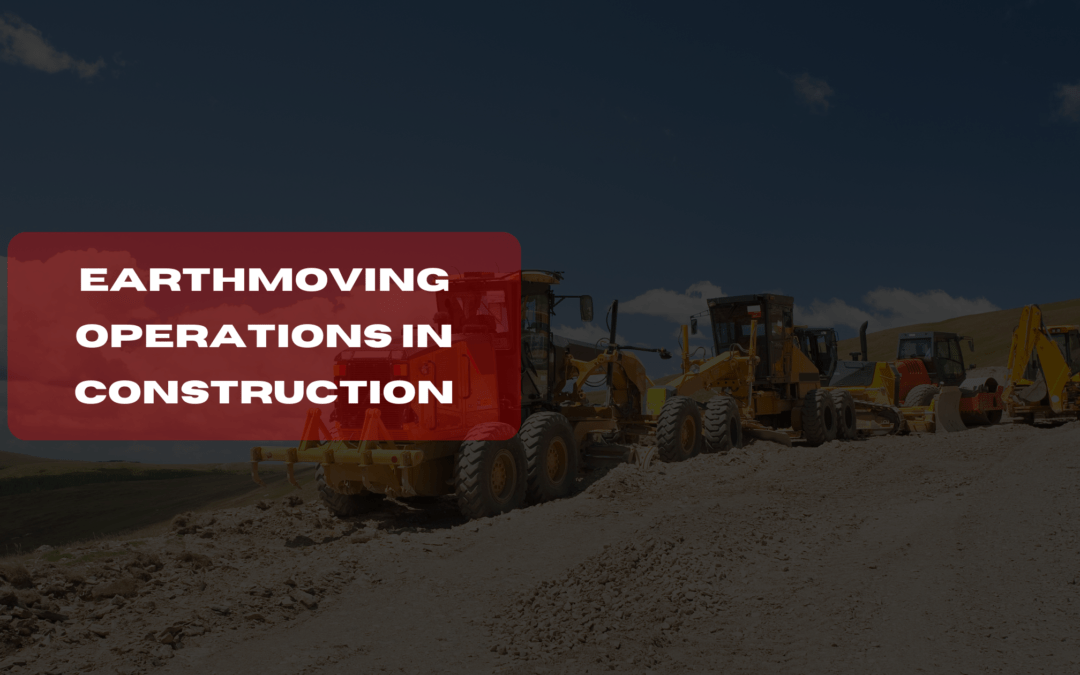
Unearthing Success: The Art of Earthmoving Operations in Construction
When it comes to constructing the world around us, there’s a vital process that often takes center stage—earthmoving operations. These operations are the first steps in creating a stable and secure foundation for any construction project, from building towering skyscrapers to crafting intricate highway systems. In this comprehensive guide, we’ll unearth the key steps involved in earthmoving operations and introduce you to the earthmoving equipment that makes it all possible.
The Significance of Earthmoving Operations
“In construction, there is no single blueprint for success, but there is always a strong foundation.”
Before we dig into the nitty-gritty of earthmoving, it’s essential to understand why these operations matter so much. Properly executed earthmoving sets the stage for everything that follows:
- Increased Stability: Earthmoving ensures that the ground beneath a structure is stable, reducing the risk of settling or shifting over time.
- Safe and Clear Environment: Clearing vegetation and debris creates a safe, unobstructed space for construction activities and helps protect the environment.
- Efficient Water Management: Proper grading and shaping of the terrain ensure effective water drainage, preventing water-related issues in the future.
- Reduced Swelling and Shrinkage: Earthmoving helps mitigate soil swelling when wet and shrinkage when dry, preventing damage to structures.
Key Steps in Earthmoving Operations
Step 1: Surveying and Site Preparation
Importance: Surveying is the bedrock of earthmoving operations. It provides critical information about the construction site’s topography, existing structures, and soil conditions. Without accurate survey data, construction plans can easily go awry.
Process:
- Surveyors use sophisticated equipment like total stations and GPS to measure elevations, distances, and angles.
- The data collected during surveying is used to create site plans and maps, serving as the blueprint for the project.
Step 2: Clearing Vegetation and Debris
Importance: Clearing the construction site of vegetation, trees, and debris is like creating a blank canvas. It’s the first step in transforming the landscape.
Process:
- Heavy machinery such as bulldozers and excavators is deployed to clear the site.
- Trees, shrubs, and obstacles are removed, ensuring a clean slate for construction.
Step 3: Excavation and Soil Removal
Importance: Excavation is the act of digging into the earth to create trenches, foundations, basements, or other required features. It’s the groundwork for building anything substantial.
Process:
- Excavation equipment, including backhoes and excavators, is used to remove soil and, in some cases, rock.
- The excavated material may be transported away or stockpiled for later use.
Step 4: Shaping and Grading the Terrain
Importance: Shaping and grading the terrain is all about sculpting the land to meet the project’s specifications. It’s like creating the canvas on which the masterpiece will be painted.
Process:
- Motor graders and bulldozers are the go-to machines for shaping and grading.
- They level surfaces, create slopes, and ensure the terrain conforms to the desired specifications.
Step 5: Compaction and Stabilization of the Soil
Importance: Compaction is the final touch that ensures the soil is dense and stable. Stabilization may be required for certain soil types to enhance their properties.
Process:
- Compaction equipment like vibratory rollers and plate compactors are used to compress the soil to the required density.
- Stabilization techniques, such as adding cement or lime, can be employed to enhance the soil’s strength and stability.
Earthmoving Equipment: The Workhorses of Construction
Now that we’ve unearthed the key steps in earthmoving operations, let’s meet the machinery that gets the job done. These are the workhorses of construction, each designed for specific tasks and applications.
Bulldozers
- Application: Bulldozers are versatile and ideal for pushing and moving large quantities of soil, debris, or other materials.
Excavators
- Application: Excavators are like the Swiss Army knives of earthmoving, used for digging, trenching, and material handling.
Loaders
- Application: Front-end loaders excel at loading materials like soil, gravel, or debris into trucks or transport equipment.
Motor Graders
- Application: Motor graders are precision instruments for grading and leveling surfaces, ensuring they meet the desired specifications.
Scrapers
- Application: Scrapers are designed for moving large volumes of earth over shorter distances, often used in large-scale earthwork projects.
Earth Movers
- Application: These specialized machines are heavy lifters, moving massive quantities of materials efficiently, commonly found in mining and large-scale earthwork projects.
Building the Foundation
As we wrap up our exploration of earthmoving operations, remember that this is just the beginning. Earthmoving sets the stage for construction, providing the stable foundation upon which remarkable structures stand. The next time you see a towering skyscraper or drive on a smooth highway, you’ll know that it all started with the art of earthmoving.
In the words of John Ruskin, “When we build, let us think that we build forever.” And when we build forever, we build on the firm foundation laid by the art of earthmoving.
Note: This article serves as a comprehensive guide to earthmoving operations and equipment. Always consult with qualified professionals for precise guidance and recommendations based on your specific construction project.
Project Management, Construction Project Management, Resource Management
Soil Compaction Equipment: Essentials
Soil compaction is a fundamental step in the world of construction and civil engineering. It’s the process of increasing soil density and improving its load-bearing capacity, ensuring that structures rest on a stable and secure foundation. Whether you’re building a road, constructing a building, or working on any infrastructure project, compaction is an essential part of the process.
In this comprehensive guide, we will explore the various types of equipment used for compaction, providing insights into their unique characteristics and applications. Understanding these options will help you make informed decisions when it comes to choosing the right equipment for your project.
Why Soil Compaction Matters
Before we dive into the different types of compaction equipment, let’s briefly discuss why soil compaction is so crucial in construction. Proper soil compaction offers several benefits:
- Increased Load-Bearing Capacity: Compacted soil can bear heavier loads without settling or shifting, making it an ideal foundation for structures.
- Stability: Compaction reduces the risk of soil settling, which can lead to structural damage over time.
- Improved Drainage: Well-compacted soil has fewer air voids, allowing for better water drainage and preventing erosion.
- Reduced Swelling and Shrinkage: Compacted soil is less prone to swelling when wet and shrinking when dry, which can cause damage to foundations.
Now, let’s explore the various types of equipment used to achieve effective soil compaction.
Types of Compaction Equipment
1. Smooth-Wheeled Rollers
- Application: These rollers are often used for compacting granular soils like gravel, sand, and crushed stone.
- Characteristics: Smooth, flat drums apply pressure evenly across the surface.
- Ideal for: Road construction, large open areas.
- Application: Designed for cohesive soils like clay or silt.
- Characteristics: Cylindrical drums with raised lugs or feet penetrate the soil, kneading it to achieve compaction.
- Ideal for: Preparing cohesive soils for construction.
3. Pneumatic Rollers
- Application: Suitable for finishing and sealing surfaces.
- Characteristics: Rubber tires provide even compaction.
- Ideal for: Asphalt compaction and areas requiring precise control.
4. Vibratory Rollers
- Application: Effective for achieving high-density compaction in both cohesive and granular soils.
- Characteristics: Vibrating drums generate dynamic forces to compact soil.
- Ideal for: Achieving maximum compaction in a variety of soil types.
5. Tamping Rammers (Jumping Jacks)
- Application: Small, handheld equipment used for compacting confined areas, trenches, and narrow spaces.
- Characteristics: Provides point compaction.
- Ideal for: Compact spaces and cohesive soils.
6. Plate Compactors
- Application: Walk-behind machines with a heavy flat plate.
- Characteristics: Versatile and suitable for compacting granular soils and asphalt.
- Ideal for: Smaller projects and tight spaces.
7. Vibratory Plate Compactors
- Application: Vibrating plates for improved compaction in granular soils.
- Characteristics: Highly efficient.
- Ideal for: Larger-scale projects.
8. Trench Rollers
- Application: Compact, ride-on machines designed for trench compaction.
- Characteristics: Effective in narrow trenches.
- Ideal for: Compacting around utility installations.
Now that we’ve covered the various types of compaction equipment let’s compare them based on several factors to help you make an informed choice.
Factors to Consider When Choosing Compaction Equipment
When selecting the right compaction equipment for your project, it’s crucial to consider the following factors:
1. Soil Type
Different soils require different compaction equipment. Granular soils, like sand and gravel, often work well with smooth-wheeled or vibratory rollers. On the other hand, cohesive soils such as clay or silt may benefit from padfoot rollers or tamping rammers.
2. Project Scale
The size and scope of your project play a significant role in equipment selection. Large-scale projects may require heavy-duty vibratory rollers, while smaller projects or tight spaces may be better suited for plate compactors or trench rollers.
3. Desired Density
Consider the level of compaction required for your project. Some equipment types can achieve higher compaction densities than others. Ensure that the equipment you choose can meet the project’s density requirements.
4. Access and Maneuverability
Evaluate the accessibility of the compaction area. If your project site has limited access or tight spaces, compact equipment like plate compactors or trench rollers may be more suitable.
5. Frequency of Compaction
Consider how frequently you’ll need to use the compaction equipment. Some types are suitable for frequent use and can handle heavy workloads, while others may be more specialized and used less frequently.
In Conclusion
Soil compaction is a critical step in construction and civil engineering, and choosing the right equipment is essential to ensure the stability and longevity of your project. Understanding the characteristics and applications of different compaction equipment types is the key to making informed decisions.
As you embark on your construction journey, remember this quote by renowned architect Frank Lloyd Wright: “The heart is the chief feature of a functioning mind.” Similarly, the foundation is the chief feature of a stable structure. So, choose your compaction equipment wisely, and build on a solid foundation.
For more construction-related insights and guidance, stay tuned to our blog. We’re here to help you navigate the world of construction project management and ensure your projects are a resounding success.
Now, go out there and build with confidence!
Note: This article serves as a guide to different types of compaction equipment. Always consult with a qualified engineer or equipment specialist for precise equipment recommendations based on your project’s unique requirements.