Void and Voidable Contracts in Construction: Understanding Legal Implications
When navigating the complex landscape of construction projects, understanding the different types of contracts and their legal standing is crucial. Not all contracts hold the same legal weight, and knowing when an agreement is void or voidable can save you from potential legal complications and financial losses. This article explores void and voidable contracts in the context of construction, offering insights into their characteristics and legal implications.
Table of Contents
Understanding Void Contracts
A void contract is an agreement that is not legally enforceable from the moment it is created. In essence, a void contract never legally existed and creates no rights or obligations for either party.
Characteristics of Void Contracts
Void contracts typically have the following characteristics:
Lack of Legal Effect: A void contract has no legal validity from its inception.
No Legal Remedy: Neither party can enforce a void contract in court.
No Transfer of Rights: Property or rights cannot be transferred under a void contract.
Cannot Be Ratified: Unlike voidable contracts, void contracts cannot be made valid later.
Immediate Nullity: The contract is considered null and void as soon as it is created.
Common Causes of Void Contracts
Several factors can render a contract void:
Illegal Subject Matter: Contracts for purposes that violate the law or public policy.
Impossible Performance: Agreements for something that cannot possibly be done.
Lack of Essential Elements: Missing any of the six essential elements of a valid contract.
Agreements with Incompetent Parties: Contracts with minors, persons of unsound mind, etc.
Uncertain Terms: Contracts with terms that are too vague or uncertain to enforce.
Understanding Voidable Contracts
A voidable contract, unlike a void contract, is valid and enforceable when created but can be rejected by one party due to some flaw in the contract formation.
Characteristics of Voidable Contracts
Voidable contracts have the following key characteristics:
Initially Valid: A voidable contract is initially valid and legally binding.
Option to Rescind: One party has the option to either continue with or reject the contract.
Ratification Possible: The affected party can choose to affirm the contract despite its defects.
Specific Time Limit: There is usually a specific period within which the contract can be voided.
Legal Remedy Available: The affected party can seek legal remedies.
Common Causes of Voidable Contracts
A contract may be voidable due to:
Misrepresentation: False statements that induced a party to enter the contract.
Fraud: Deliberate deception to secure unfair or unlawful gain.
Duress: Threats or pressure forcing a party to enter the contract.
Undue Influence: Improper persuasion that overcomes free will.
Mistake: In some cases, a fundamental mistake about the contract’s subject matter.
Comparative Analysis: Void and Voidable Contracts
To better understand the differences, let’s compare void and voidable contracts:
Void Contract
Voidable Contract
Legal Status
Not Legally enforceable from inception
Initially valid but can be rejected by one party
Parties rights
No rights or Obligation created
Rights exist until contract is voided
Remedy
No remedy available
Affected party can seek legal remedies
Ratification
Cannot be ratified or validated later
can be ratified by affected party
Time Consideration
Void from the beginning
Can be avoided within a specific timeframe
Effect on Third Parties
No rights can be transferred to third parties
Rights acquired by third parties before avoidance remain valid
Void Contracts in Construction: Examples and Implications
Common Examples in Construction
Illegal Building Practices: A contract to construct a building that violates zoning laws or building codes.
Unlicensed Work: In many jurisdictions, contracts with unlicensed contractors for work that requires licensing.
Impossible Specifications: Agreements to construct something that is physically impossible or uses non-existent materials.
Legal Implications
When a construction contract is void:
No party can enforce any terms of the agreement
Any money or property exchanged may need to be returned (restitution)
No damages can be claimed for non-performance
No specific performance can be ordered
Third parties acquiring rights under the contract receive no protection
Case Example: A property owner contracts with a builder to construct a residential complex in an area zoned exclusively for commercial use. The contract is void because its purpose violates zoning laws. Neither party can enforce the contract, and if the builder has started work, they may not be entitled to payment (though they might recover on a quantum meruit basis).
Voidable Contracts in Construction: Examples and Implications
Common Examples in Construction
Misrepresentation of Site Conditions: A contractor enters a fixed-price contract after the owner misrepresents the soil conditions.
Coercion in Bidding: A contractor is threatened into submitting a particular bid.
Fraud in Materials: A supplier fraudulently misrepresents the quality or specifications of construction materials.
Undue Influence: A consultant exerts undue pressure on an inexperienced client to accept unfavorable terms.
Legal Implications
When a construction contract is voidable:
The affected party can choose to continue with or void the contract
If voided, the contract becomes unenforceable
The affected party may seek damages for losses incurred
Specific time limitations usually apply for declaring the intention to void
Third parties who acquired rights before the contract was voided may retain those rights
Case Example: A contractor signs a renovation contract after the property owner deliberately conceals serious structural issues. Upon discovering the misrepresentation, the contractor has the right to void the contract and may recover costs already incurred plus potential damages.
Practical Guidance for Construction Professionals
Avoiding Void Contracts
Verify Legality: Ensure the project complies with all zoning laws, building codes, and regulations.
Check Licensing: Verify that all parties have proper licensing for the work to be performed.
Confirm Feasibility: Ensure that the project specifications are technically and physically possible.
Verify Capacity: Confirm that all parties have the legal capacity to enter into contracts.
Protecting Against Voidable Contracts
Full Disclosure: Provide complete and accurate information during negotiations.
Due Diligence: Thoroughly investigate site conditions, existing structures, and other relevant factors.
Clear Communication: Ensure that all parties fully understand contract terms.
Documentation: Maintain detailed records of all communications and representations.
Professional Review: Have contracts reviewed by legal professionals before signing.
Conclusion
Understanding the distinction between void and voidable contracts is essential for anyone involved in construction projects. Void contracts have no legal effect from the beginning, while voidable contracts are initially valid but can be rejected by one party due to specific defects in the contract formation.
For construction professionals, this knowledge is particularly valuable given the complex nature of construction projects and the significant investments involved. By recognizing the factors that can render a contract void or voidable, stakeholders can take proactive steps to ensure their agreements are legally sound and enforceable.
Remember that contract law can vary by jurisdiction, so it’s always advisable to consult with a legal professional familiar with local laws before entering into significant construction agreements. By doing so, you can minimize risks and create a solid foundation for successful project delivery.
[This article is intended for educational purposes only and does not constitute legal advice. For specific guidance on your situation, please consult with a qualified legal professional.]
Why Management Matters in Construction: Key Needs and Challenges
Construction projects are among the most complex undertakings in the business world. From residential buildings to commercial complexes and infrastructure developments, these projects involve numerous activities, multiple stakeholders, and significant resources. Whether you’re a construction management student preparing for exams or a professional looking to enhance your understanding, grasping the fundamental need for management in construction and the challenges faced is essential for success.
This article explores why management is crucial in construction projects and examines the major challenges that construction managers face in today’s dynamic environment.
Table of Contents
The Critical Need for Management in Construction Projects
Construction projects don’t just happen—they require careful planning, coordination, and oversight. Here’s why management is indispensable in building and construction endeavors:
Navigating the Complexity of Construction Operations
Construction projects involve intricate, interconnected activities that must be executed in a specific sequence. Consider these complexity factors:
Multiple Interdependent Activities: A typical medium-sized commercial building project can involve over 3,000 activities that must be sequenced correctly.
Technical Specifications: Construction requires adherence to detailed technical requirements, building codes, and quality standards.
Site Conditions: Each construction site presents unique challenges related to topography, soil conditions, and existing structures.
Regulatory Compliance: Projects must navigate a complex web of permits, approvals, and inspections from various authorities.
Courtesy: Awuzie, Bankole. Journal of Construction Project Management and Innovation.
A study by the Construction Industry Institute found that properly managed projects experienced 15-20% better performance in terms of schedule adherence and budget control compared to poorly managed projects. Without effective management, these complex operations quickly become chaotic, leading to delays, cost overruns, and quality issues.
Coordinating Diverse Resources
Construction projects require a vast array of resources that must be coordinated precisely:
Human Resources: Skilled and unskilled labor from various trades and disciplines
Materials: Thousands of different materials and components, each with specific procurement and handling requirements
Equipment: Heavy machinery, tools, and specialized equipment
Subcontractors: Multiple specialized service providers working simultaneously
Financial Resources: Capital allocation, cash flow management, and payment schedules
The table below illustrates the resource coordination challenges in a typical mid-sized construction project:
Resource Type
Coordination Challenges
Impact of Poor Management
Labor
Multiple trades working in sequence and parallel
Work conflicts, idle time, quality issues
Materials
Just-in-time delivery, storage limitations, quality control
Delays, wastage, rework
Equipment
Scheduling, maintenance, sharing across activities
Idle equipment, rental overruns, productivity loss
Subcontractors
Scheduling, contract management, quality control
Coordination conflicts, legal disputes
Financial
Cash flow management, payment scheduling
Liquidity problems, work stoppages
Effective management ensures these resources are available when needed, used efficiently, and coordinated to avoid conflicts and delays.
Mitigating Diverse Risks
Construction projects face numerous risks that can threaten their success:
Safety Hazards: Construction consistently ranks among the most dangerous industries, with significant injury and fatality rates.
Financial Risks: From estimating errors to unexpected cost escalations and payment delays.
Weather and Environmental Risks: Outdoor work is vulnerable to weather conditions and environmental factors.
Design and Technical Risks: Errors in design, unforeseen site conditions, and technical challenges.
Contractual and Legal Risks: Disputes, claims, and litigation.
Professional management implements risk identification, assessment, and mitigation strategies to protect the project, workers, and stakeholders. Without proper risk management, construction projects face potentially catastrophic consequences.
Major Challenges in Construction Project Management
Even with skilled management, construction projects face significant challenges. Understanding these challenges is the first step toward addressing them effectively.
Battling Time and Cost Overruns
Time and cost overruns remain the most persistent challenges in construction project management:
Industry Statistics: According to a global construction survey by McKinsey, 98% of megaprojects experience cost overruns or delays, with average cost increases of 80% and schedule delays of 20 months.
Root Causes: The primary causes include scope changes, inaccurate estimates, poor planning, unforeseen conditions, and design errors.
Courtesy: Gómez-Cabrera, A., Gutierrez-Bucheli, L., & Muñoz, S. (2023). Causes of time and cost overruns in construction projects: a scoping review. International Journal of Construction Management, 24(10), 1107–1125. https://doi.org/10.1080/15623599.2023.2252288
Construction managers must implement robust planning, monitoring, and control mechanisms to combat these challenges. This includes realistic scheduling, accurate cost estimation, change management procedures, and systematic progress tracking.
Optimizing Resource Allocation
Resource allocation presents unique challenges in construction:
Labor Shortages: The construction industry faces critical skilled labor shortages worldwide.
Equipment Optimization: Balancing equipment needs across activities to minimize idle time while avoiding bottlenecks.
Material Management: Ensuring materials are available when needed without excessive inventory.
Subcontractor Coordination: Managing multiple subcontractors with different schedules, priorities, and work methods.
Effective construction management requires sophisticated resource planning, leveling, and optimization techniques. Modern approaches include resource-loaded schedules, just-in-time delivery systems, and integrated subcontractor management platforms.
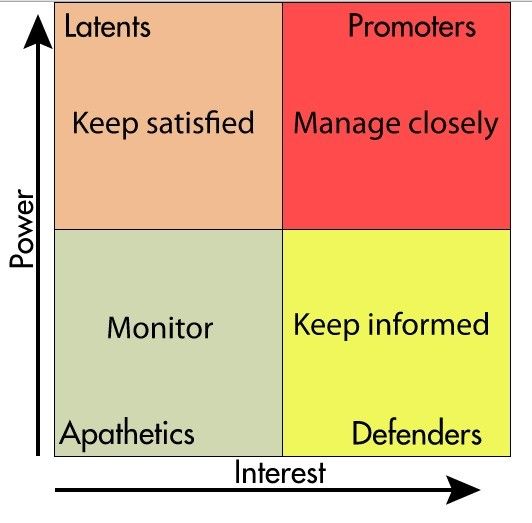
Managing Diverse Stakeholders
Construction projects involve numerous stakeholders with different expectations, priorities, and communication needs:
Clients/Owners: Focused on value, quality, schedule, and budget
Design Professionals: Concerned with design integrity and technical performance
Regulatory Authorities: Interested in compliance with codes and regulations
Communities: Affected by construction impacts and project outcomes
Project Team Members: Concerned with work conditions, clarity of direction, and job security
Suppliers and Subcontractors: Focused on contractual terms, payment, and work conditions
Construction managers must develop comprehensive stakeholder management strategies, including identification, analysis, communication planning, and engagement. Failure to manage stakeholders effectively can result in conflicts, resistance, and project disruptions.
Modern Approaches to Construction Management
To address these needs and challenges, the construction industry has developed specialized management approaches:
Integrated Project Delivery (IPD): Collaborative approach that integrates people, systems, and practices into a process that harnesses the talents of all participants.
Building Information Modeling (BIM): Digital representation of physical and functional characteristics of facilities that serves as a shared knowledge resource.
Lean Construction: Adaptation of lean manufacturing principles to minimize waste and maximize value.
Construction Management Software: Specialized tools for planning, scheduling, resource management, and communication.
Conclusion
The need for management in construction projects stems from their inherent complexity, resource coordination requirements, and risk mitigation needs. Despite advancements in management approaches, significant challenges remain, including time and cost overruns, resource allocation issues, and stakeholder management.
Effective construction project management requires a blend of technical knowledge, leadership skills, and specialized methodologies. By understanding the fundamental needs and challenges, construction professionals can develop strategies to enhance project success rates, improve efficiency, and deliver greater value to clients and society.
Understanding Construction Contracts: Definition and Essential Elements
Before diving into the intricate world of construction contracts, it’s essential to grasp the fundamental concept of what constitutes a valid contract. This knowledge forms the foundation upon which successful construction projects are built and managed.
Table of Contents
What is a Contract According to Indian Law?
The Indian Contract Act, 1872, defines a contract as “an agreement enforceable by law.” This seemingly simple definition encompasses several crucial aspects that determine whether an agreement between parties can be legally binding and enforceable.
To break it down further:
An agreement occurs when an offer made by one party is accepted by another
Such an agreement becomes a contract when it creates legal obligations and provides legal remedies
Not all agreements are contracts, but all contracts are agreements
In the construction industry, contracts play a pivotal role in defining the relationship between various stakeholders, including owners, contractors, subcontractors, suppliers, and consultants. They establish rights, responsibilities, and remedies available to each party.
The Six Essential Elements of a Valid Contract
For a construction contract to be legally valid and enforceable, it must contain six essential elements. Let’s examine each one in detail:
1. Offer and Proposal
An offer is a definite promise to be bound by specific terms, made with the intention that it shall become binding once accepted by the person to whom it is addressed. In construction:
A contractor submitting a bid for a project is making an offer
The offer must be clear, definite, and complete
It should communicate the willingness to enter into an agreement
It must be communicated to the offeree (the person receiving the offer)
Example: A contractor submits a detailed proposal to build a commercial building for ₹2 crore, specifying the scope, timeline, and quality standards.
2. Acceptance
Acceptance is the unqualified and absolute assent to all the terms of the offer. For valid acceptance:
It must be absolute and unqualified
It must be communicated to the offeror
It must be expressed in a prescribed manner if requested
It must be given within a reasonable time
Example: The property owner reviews the contractor’s proposal and sends a formal letter of acceptance without changing any terms.
3. Consideration
Consideration refers to something of value exchanged between the parties. It’s the price paid by one party for the promise of the other. Characteristics include:
It must have value in the eyes of the law
It need not be adequate but must be sufficient
It must be real and not illusory
It must not be something a person is already legally bound to do
Example: In exchange for construction services, the owner agrees to pay the contractor ₹2 crore in installments tied to project milestones.
4. Competency of Parties
Parties entering into a contract must be legally competent. Under Indian law, a person is competent when they are:
Of the age of majority (18 years)
Of sound mind
Not disqualified from contracting by any law
Example: A construction company registered under the Companies Act enters into a contract with a property developer, both being legally competent entities.
5. Free Consent
Consent is said to be free when it is not caused by:
Coercion
Undue influence
Fraud
Misrepresentation
Mistake
Example: Both the contractor and client voluntarily agree to the contract terms after due deliberation, without any pressure or deception.
6. Legal Object
The purpose of the agreement must be lawful. An object is unlawful if:
It is forbidden by law
It is of such nature that it would defeat provisions of any law
It is fraudulent
It involves injury to the person or property of another
It is immoral or against public policy
Example: A contract to construct a residential complex that complies with all zoning laws, building codes, and environmental regulations.
To ensure your construction contracts remain valid and enforceable:
Document Everything: Keep records of all communications leading to contract formation
Be Specific: Clearly define scope, quality standards, timelines, and payment terms
Review Thoroughly: Have legal counsel review contracts before signing
Verify Capacity: Ensure all parties have legal authority to enter the agreement
Address Contingencies: Include provisions for unforeseen circumstances
Follow Formalities: Comply with any legal requirements for execution (witnesses, notarization)
Conclusion
Understanding the definition and essential elements of a valid contract under the Indian Contract Act, 1872, provides construction professionals with the knowledge necessary to create legally binding agreements. By ensuring all six elements—offer, acceptance, consideration, competency, free consent, and legal object—are properly addressed, construction projects can begin with a solid legal foundation.
Remember, a well-drafted contract not only protects all parties involved but also provides clarity on expectations, reduces the risk of disputes, and contributes to the overall success of construction projects. As the industry continues to evolve, the fundamental principles of contract law remain a constant guide for professional practice.
[This blog article is intended for educational purposes only and does not constitute legal advice. For specific legal guidance, please consult with a qualified attorney.]
Principles and Objectives of Project Management in Construction
Project management in construction is a specialized discipline that demands a unique blend of technical knowledge, leadership skills, and strategic thinking. In today’s competitive construction industry, effective project management has become the cornerstone of successful project delivery. This article explores the fundamental principles and key objectives of project management specifically within the construction context, providing insights that both students and professionals can apply to improve project outcomes.
Table of Contents
Core Principles of Construction Project Management
The foundation of successful construction project management rests on three fundamental principles: planning, organizing, and controlling. These principles form the backbone of any project management methodology and are particularly critical in the complex world of construction.
1. Planning: The Blueprint for Success
Planning in construction project management involves developing a comprehensive roadmap that guides the entire project from conception to completion. Effective planning requires:
Scope Definition: Establishing the boundaries of work to be performed
Resource Planning: Identifying and allocating necessary resources (human, material, equipment)
Risk Assessment: Anticipating potential challenges and developing mitigation strategies
Timeline Development: Creating realistic schedules with key milestones
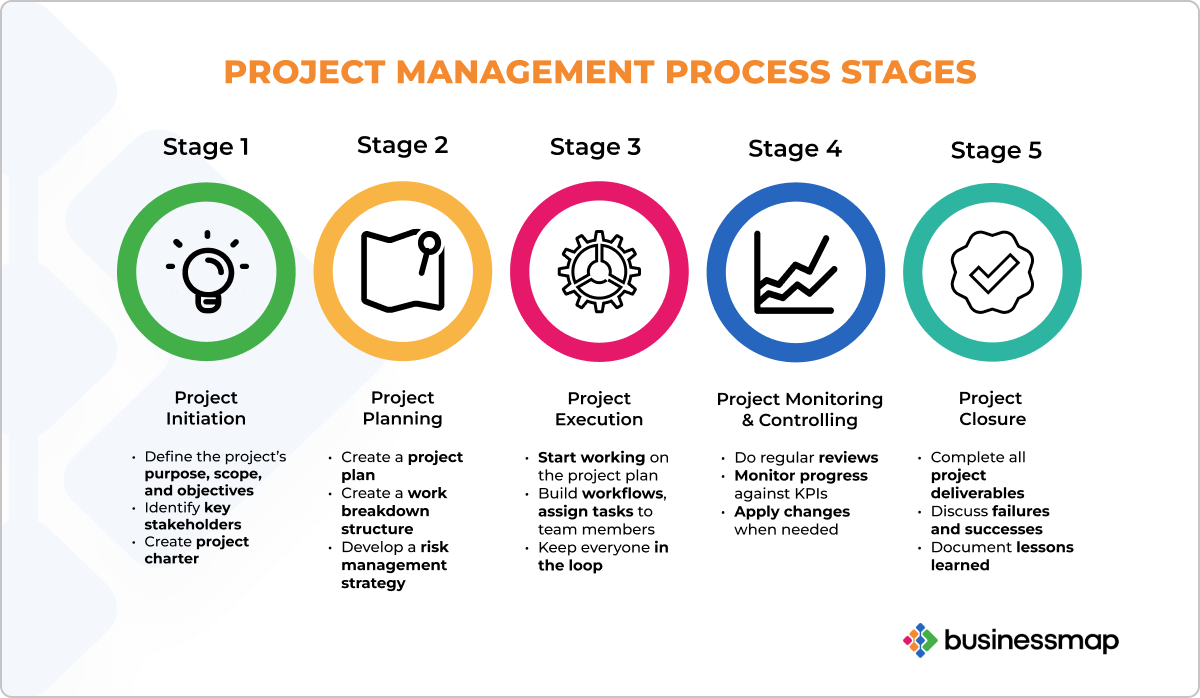
Graphics Courtesy: https://businessmap.io/
Research indicates that projects with thorough planning phases experience 20-30% fewer schedule delays and budget overruns than those with inadequate planning. This planning stage lays the groundwork for all subsequent project activities and decisions.
2. Organizing: Structuring for Efficiency
The organizing principle focuses on establishing an effective framework for project execution, including:
Team Structure Development: Creating clear reporting relationships and responsibility assignments
Resource Organization: Arranging resources for optimal utilization
System Implementation: Establishing processes and protocols for project execution
Communication Channels: Defining how information will flow among stakeholders
A well-organized project structure enhances accountability, reduces confusion, and promotes efficient resource utilization. The table below illustrates common organizational structures in construction projects:
Organizational Structure
Key Characteristics
Best Suited For
Functional
Team members report to functional managers
Small-scale projects
Matrix
Team members report to both project and functional managers
Medium-sized projects with specialized requirements
Projectized
Team members report directly to project manager
Large, complex projects
3. Controlling: Keeping the Project on Track
The controlling principle involves monitoring progress and taking corrective action to ensure the project stays aligned with its objectives:
Performance Monitoring: Tracking progress against established baselines
Cost Management: Monitoring expenditures and managing the budget
Schedule Control: Tracking timeline adherence and managing delays
Scope Management: Preventing unauthorized changes to project scope
Effective controlling mechanisms provide early warning systems for potential problems, allowing project managers to implement solutions before minor issues develop into major challenges.
Key Objectives of Construction Project Management
While every construction project has its unique goals, there are three universal objectives that project managers must balance: time, cost, and quality. These form what is often called the “Iron Triangle” of project management.
Quality Assurance: Preventing defects through proper planning and execution
Corrective Action: Addressing quality issues promptly when they arise
Application in the Construction Context
Construction projects present unique challenges that require specialized application of project management principles:
Resource Optimization
Construction projects involve diverse resources including labor, equipment, and materials. Effective resource optimization includes:
Labor Productivity: Maximizing workforce efficiency through proper scheduling and assignment
Equipment Utilization: Ensuring optimal use of expensive machinery and tools
Material Management: Coordinating procurement, delivery, and storage to prevent delays
Risk Management
Construction projects face numerous risks including safety hazards, weather delays, and supply chain disruptions:
Risk Identification: Systematically identifying potential threats to project success
Risk Assessment: Evaluating the probability and impact of identified risks
Mitigation Planning: Developing strategies to reduce risk likelihood or impact
Contingency Planning: Preparing response plans for risks that materialize
Stakeholder Coordination
Construction projects typically involve numerous stakeholders with diverse interests:
Communication Planning: Developing strategies for effective information sharing
Expectation Management: Aligning stakeholder expectations with project realities
Conflict Resolution: Addressing disagreements constructively and promptly
Conclusion
The principles and objectives of project management provide a framework for successfully navigating the complexities of construction projects. By mastering planning, organizing, and controlling principles while balancing the objectives of time, cost, and quality, construction project managers can significantly improve project outcomes.
In today’s increasingly complex construction environment, the application of these fundamentals is more important than ever. Whether you’re a student preparing for a career in construction management or a professional looking to enhance your project delivery capability, understanding these core concepts provides the foundation for excellence in construction project management.
By implementing these principles and focusing on these objectives, construction professionals can reduce risks, optimize resources, and ultimately deliver successful projects that meet or exceed stakeholder expectations.
Contract Management: The Cornerstone of Construction Project Success
In the complex world of construction projects, effective contract management plays a crucial role in ensuring project success. This blog post will explore the importance of contract management and highlight key contract clauses that are particularly relevant to construction projects.
The Role of Contract Management in Project Success
Contract management is more than just paperwork; it’s a strategic process that can significantly impact the outcome of a construction project. Let’s examine its key roles:
Ensuring Compliance
One of the primary functions of contract management is to ensure that all parties involved in a construction project comply with the agreed-upon terms and conditions. This includes:
Adhering to project timelines
Meeting quality standards
Following safety regulations
Fulfilling financial obligations
By actively managing contracts, project managers can track compliance and address any deviations promptly, preventing small issues from escalating into major problems.
Minimizing Disputes
Construction projects often involve multiple stakeholders with diverse interests, which can lead to conflicts. Effective contract management helps minimize disputes by:
Clearly defining roles and responsibilities
Establishing communication protocols
Setting out procedures for handling disagreements
When disputes do arise, a well-managed contract provides a clear framework for resolution, saving time and resources that would otherwise be spent on lengthy legal battles.
Protecting Stakeholder Interests
Contracts serve as a safeguard for all parties involved in a construction project. Through careful contract management, the interests of various stakeholders are protected:
Clients are assured that they will receive the agreed-upon deliverables
Contractors can secure fair compensation for their work
Subcontractors have clarity on their scope of work and payment terms
By balancing these interests, contract management helps maintain positive relationships among all project participants, fostering a collaborative environment conducive to project success.
Key Contract Clauses Relevant to Construction Projects
While every construction contract is unique, certain clauses are particularly important in ensuring smooth project execution. Let’s explore some of these key clauses:
Scope of Work
The scope of work clause is arguably the most critical component of a construction contract. It outlines:
Detailed description of the work to be performed
Specific deliverables expected
Quality standards to be met
Any exclusions or limitations
A well-defined scope of work helps prevent misunderstandings and scope creep, which can lead to cost overruns and project delays. For example, in a building construction project, the scope of work might specify the exact dimensions of the structure, the materials to be used, and any specific architectural features.
Payment Terms
Clear and fair payment terms are essential for maintaining a healthy cash flow throughout the project. This clause typically includes:
Total contract value
Payment schedule (e.g., milestone-based or time-based)
Procedures for submitting and approving invoices
Conditions for withholding or releasing retention
Well-structured payment terms incentivize timely completion of work and provide financial security for all parties involved. For instance, a contract might stipulate that 10% of each payment is retained until the successful completion of the project, ensuring the contractor remains committed throughout the process.
Change Orders
Change is inevitable in construction projects. The change order clause outlines the process for handling modifications to the original scope of work. It usually covers:
Procedures for requesting and approving changes
Methods for determining the cost and time impact of changes
Documentation requirements for change orders
A robust change order process helps manage project scope effectively and prevents unauthorized work that could lead to disputes. For example, if unforeseen ground conditions require additional foundation work, the change order clause would guide how this extra work is approved, priced, and incorporated into the project timeline.
Dispute Resolution
Despite best efforts, conflicts may arise during a construction project. The dispute resolution clause provides a roadmap for addressing these issues. It typically includes:
Steps for escalating disputes (e.g., negotiation, mediation, arbitration)
Timelines for each stage of the resolution process
Selection of mediators or arbitrators
Allocation of costs for dispute resolution
A well-crafted dispute resolution clause can save significant time and money by providing a clear path for resolving conflicts without resorting to litigation. For instance, it might specify that parties must first attempt to resolve disputes through direct negotiation before proceeding to mediation or arbitration.
Implementing Effective Contract Management
To ensure successful contract management in construction projects, consider the following strategies:
Thorough Contract Review: Before signing, carefully review all contract terms to ensure they align with project goals and protect your interests.
Clear Communication: Establish open lines of communication with all parties involved in the contract. Regular meetings can help address issues before they escalate.
Document Management: Maintain organized records of all contract-related documents, including amendments, change orders, and correspondence.
Performance Monitoring: Regularly track and document the performance of all parties against contract terms. This can help identify potential issues early.
Risk Management: Identify potential risks associated with the contract and develop mitigation strategies.
Training: Ensure that project team members understand the contract terms and their responsibilities in managing the contract.
Use of Technology: Implement contract management software to streamline processes and improve visibility into contract performance.
Conclusion
Effective contract management is a cornerstone of successful construction projects. By ensuring compliance, minimizing disputes, and protecting stakeholder interests, it creates a solid foundation for project execution. Key contract clauses such as scope of work, payment terms, change orders, and dispute resolution mechanisms provide the necessary structure to navigate the complexities of construction projects.
Remember, contracts should not be viewed as mere formalities, but as powerful tools for project success. By investing time and effort in thorough contract management, construction professionals can significantly improve project outcomes, reduce risks, and foster positive relationships with all project stakeholders.
As the construction industry continues to evolve, so too will contract management practices. Staying informed about best practices and emerging trends in this area will be crucial for anyone involved in construction project management. By mastering the art of contract management, you’ll be well-equipped to handle the challenges of modern construction projects and drive them towards successful completion.
Understanding Project Closure in Construction Management
Project closure is a critical phase in the lifecycle of any construction project. It marks the formal completion of all project activities and ensures that the project has met its objectives. In this article, we’ll explore the concept of project closure and the essential steps involved in the process.
What is Project Closure?
Project closure is the final phase in the project lifecycle. It involves wrapping up all project activities, ensuring all deliverables have been completed and accepted, and formally ending the project. This phase is crucial for several reasons:
It provides a clear endpoint for the project.
It ensures all project objectives have been met.
It allows for the formal release of resources and team members.
It provides an opportunity to reflect on the project’s successes and challenges.
In construction projects, closure is particularly important as it often involves the handover of a physical structure or facility to the client or end-users.
Steps Involved in the Project Closure Process
The project closure process typically involves several key steps. Let’s examine each of these in detail:
1. Formal Acceptance
The first step in project closure is obtaining formal acceptance of the project deliverables. This involves:
Conducting final inspections of the completed construction
Verifying that all project requirements have been met
Obtaining sign-off from the client or key stakeholders
This step is crucial as it signifies that the project has successfully delivered what was promised. In construction projects, this often includes obtaining certificates of occupancy or other regulatory approvals.
2. Closing Procurements
Next, all procurements related to the project need to be closed. This includes:
Finalizing all contracts with suppliers and subcontractors
Ensuring all payments have been made
Obtaining formal closure documentation for each contract
Proper closure of procurements helps prevent any future legal or financial issues related to the project. It’s important to review all contracts and ensure that all terms and conditions have been met.
3. Final Performance Reporting
A comprehensive final performance report should be prepared. This report typically includes:
An overview of the project’s performance against its original objectives
A summary of the project’s financial performance
Key metrics related to schedule performance, quality, and safety
Any significant challenges faced and how they were overcome
This report serves as a valuable record of the project and can inform future projects. It’s important to be thorough and objective in this reporting, highlighting both successes and areas for improvement.
4. Lessons Learned
One of the most valuable aspects of project closure is the capture of lessons learned. This involves:
Conducting a post-project review meeting with the team
Documenting what went well and what could be improved
Identifying key learnings that can be applied to future projects
The lessons learned process is crucial for continuous improvement in project management practices. It’s important to create an environment where team members feel comfortable sharing their honest feedback and insights.
Importance of Project Closure in Construction Projects
Effective project closure is particularly important in construction projects for several reasons:
Handover of Physical Assets: Construction projects result in tangible, physical assets. Proper closure ensures these assets are correctly handed over to the client or end-users, including all necessary documentation and training.
Regulatory Compliance: Many construction projects require final inspections and approvals from regulatory bodies. The closure process ensures all these requirements are met, reducing the risk of future legal issues.
Financial Closure: Construction projects often involve significant financial investments. Proper closure ensures all financial aspects are finalized, including final payments and release of any retention monies.
Warranty Period: The closure process often marks the beginning of the warranty period for the constructed facility. Clear documentation at closure is crucial for managing any future warranty claims.
Team Demobilization: Construction projects typically involve large teams. The closure process ensures proper demobilization of personnel and equipment from the site, allowing resources to be reallocated to new projects.
Best Practices for Effective Project Closure
To ensure smooth and effective project closure, consider the following best practices:
Start Early: Begin planning for project closure from the early stages of the project. This helps ensure all necessary steps are considered and planned for.
Use Checklists: Develop and use comprehensive closure checklists to ensure no important steps are missed. This can include items like final inspections, document handovers, and stakeholder sign-offs.
Communicate Clearly: Keep all stakeholders informed about the closure process and their roles in it. This includes both internal team members and external stakeholders like clients and regulatory bodies.
Document Thoroughly: Ensure all project documentation is complete, organized, and properly archived. This includes contracts, change orders, meeting minutes, and all technical documentation.
Proactive Issue Resolution: Address any outstanding issues or disputes before formal closure. This might involve negotiations with contractors or discussions with the client about minor defects.
Celebrate Success: Take time to recognize the team’s hard work and celebrate the project’s completion. This can boost morale and provide a sense of closure for team members.
Conclusion
Project closure is more than just a formality at the end of a construction project. It’s a crucial phase that ensures the project has met its objectives, all loose ends are tied up, and valuable lessons are captured for future projects.
By following a structured approach to project closure, construction project managers can ensure a smooth transition from project completion to operational use of the constructed facility. This not only marks the successful completion of the current project but also sets the stage for future success.
Remember, effective project closure not only benefits the current project but also contributes to the long-term success of the organization. It provides an opportunity to reflect on achievements, learn from challenges, and continuously improve project management practices in the construction industry.
By prioritizing thorough and effective project closure, construction professionals can enhance their project outcomes, improve client satisfaction, and build a strong foundation for future projects. In an industry where reputation and track record are crucial, mastering the art of project closure can be a significant competitive advantage.