3 types of Site Organization in Construction Projects
Table of Contents
Introduction to Site Organization in Construction Projects
Site organization plays a crucial role in the successful execution of construction projects. It involves structuring the project team, defining roles and responsibilities, and establishing communication channels to ensure efficient project delivery. Different types of site organization, such as functional, divisional, and matrix structures, offer various advantages and challenges for project management professionals. Understanding these organizational models is essential for effectively managing resources, coordinating activities, and achieving project objectives.
Types of Site Organization
The three most commonly known Site Organization structures are: Functional Organization, Divisional Organization and Matrix Organization. Now, let us take a look at each of these.
Functional Organization
Definition:
Functional organization is a hierarchical structure where employees are grouped by specialized functions or departments, such as engineering, procurement, and construction.
Source: AIHR
Characteristics:
Clear Hierarchy: Functional organizations have a clear chain of command, with distinct levels of management overseeing different departments.
Specialized Expertise: Each department focuses on a specific aspect of the project, allowing for specialized skills and knowledge.
Efficiency: Specialization enables departments to operate efficiently in their respective domains, contributing to overall project success.
Advantages:
Division of Labor: Functional organization promotes a clear division of labor, with each department handling specific tasks.
Specialization: Employees develop expertise in their respective fields, leading to higher productivity and quality of work.
Career Growth: Functional organizations offer opportunities for career advancement within specialized areas, encouraging employee development.
Disadvantages:
Communication Barriers: Silos may form between departments, hindering communication and collaboration.
Limited Flexibility: Functional organizations may struggle to adapt to changes in project requirements or market conditions.
Coordination Challenges: Coordinating activities across departments can be challenging, leading to delays or inefficiencies.
Divisional Organization
Source: AIHR
Definition:
Divisional organization groups employees based on products, projects, or geographic locations, allowing for greater autonomy and flexibility within each division.
Characteristics:
Autonomous Units: Each division operates as a self-contained entity with its own resources and management structure.
Adaptability: Divisional organizations can adapt quickly to changes in market conditions or project requirements, thanks to their decentralized structure.
Focused Management: Divisional managers have greater autonomy and decision-making authority, allowing for focused management attention on specific product lines or projects.
Advantages:
Flexibility: Divisional organizations can respond quickly to market demands or changes in project scope, thanks to their decentralized structure.
Innovation: Divisions have the freedom to innovate and experiment, fostering creativity and entrepreneurship.
Focused Attention: Divisional managers can devote their attention to specific product lines or projects, leading to improved performance and outcomes.
Disadvantages:
Duplication of Resources: Divisions may duplicate resources or functions, leading to inefficiencies or redundancies.
Coordination Challenges: Maintaining consistency and coordination across different divisions can be challenging, especially in large organizations.
Limited Central Control: Divisional organizations may lack centralized control, making it difficult to enforce standardized processes or policies.
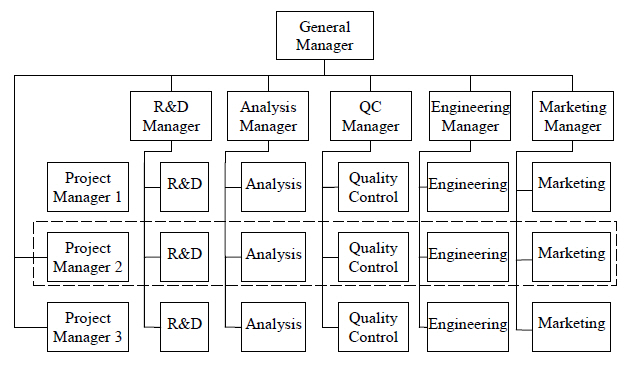
Matrix Organization
Source: designingbuildings.co.uk
Definition:
Matrix organization combines aspects of both functional and divisional structures, allowing employees to report to both functional managers and project managers.
Characteristics:
Dual Reporting Relationships: Employees report to both functional managers (e.g., engineering, procurement) and project managers, balancing functional expertise with project-specific needs.
Flexibility: Matrix structures offer flexibility in resource allocation, allowing organizations to deploy resources based on project priorities.
Enhanced Communication: Matrix organizations promote communication and collaboration between functional departments and project teams, leading to better coordination and integration.
Advantages:
Resource Flexibility: Matrix organizations can allocate resources dynamically, responding to changing project needs or priorities.
Collaboration: Matrix structures foster collaboration and teamwork across functional departments and project teams, leading to synergistic outcomes.
Adaptability: Matrix organizations are well-suited for dynamic environments or projects with complex requirements, thanks to their flexible structure.
Disadvantages:
Role Confusion: Employees may experience role confusion or conflicting priorities due to dual reporting relationships, leading to tension or inefficiencies.
Complexity: Managing a matrix organization requires strong communication and conflict resolution skills, as well as robust project management processes.
Power Struggles: Matrix structures can lead to power struggles between functional managers and project managers, especially if roles and responsibilities are not clearly defined.
Conclusion
In conclusion, effective site organization is essential for the successful execution of construction projects. Understanding the different types of site organization, including functional, divisional, and matrix structures, allows project managers to choose the most suitable approach for their projects. Each organizational model offers unique advantages and challenges, influencing project management practices and team dynamics. By carefully considering the project requirements and organizational context, project managers can optimize resource allocation, enhance communication, and drive project success.
Forecasting stands as a pivotal aspect in the realm of construction project management, guiding various facets that ensure successful project outcomes. Effective time management, paramount to project success, dictates the trajectory of projects from inception to completion. This entails not only personnel time management but also meticulous planning strategies to uphold timelines and budgets.
In an ever-evolving landscape, where uncertainties loom large, the ability to predict project timelines with accuracy is crucial for success. This section elucidates the significance of forecasting in construction project management and explores techniques for predicting future project timelines.
Furthermore, the critical path takes center stage in orchestrating project timelines, guiding teams towards timely completion. Understanding and managing this critical sequence of tasks are fundamental to project success, delineating the project's overall duration. Delving into its intricacies, this section emphasizes its profound significance in project management and offers strategies for effectively measuring changes to safeguard project timelines.
Together, these components form a comprehensive framework for navigating the complexities of construction project management, ensuring projects progress smoothly and deliver outcomes that exceed expectations.
2. Importance of Effective Time Management:
Time is a precious resource in construction projects, where delays can result in significant financial losses and reputational damage.
Efficient time management allows project teams to allocate resources effectively, streamline workflows, and meet project deadlines.
By optimizing personnel time, construction projects can maintain productivity levels and ensure timely completion, leading to client satisfaction and repeat business opportunities.
3. Planning Strategies for Personnel Time Allocation:
Project managers must carefully assess project requirements and allocate personnel resources accordingly.
Utilizing tools such as Gantt charts and resource leveling techniques can aid in scheduling tasks and allocating personnel time effectively.
Implementing a clear communication strategy to ensure all team members understand their roles and responsibilities and are aware of project timelines is essential for successful time management.
4. Role of Project Managers in Optimizing Personnel Time:
Project managers play a central role in coordinating personnel resources and ensuring that project tasks are completed on schedule.
They must possess strong leadership and communication skills to effectively delegate tasks, monitor progress, and address any issues that may arise.
Utilizing project management software can streamline communication processes and facilitate real-time collaboration among team members, enhancing overall efficiency.
5. Techniques for Predicting Future Project Timelines:
Predicting future project timelines requires a blend of historical data analysis, industry insights, and a keen understanding of project dynamics. Several techniques empower project managers to forecast project timelines with varying degrees of accuracy:
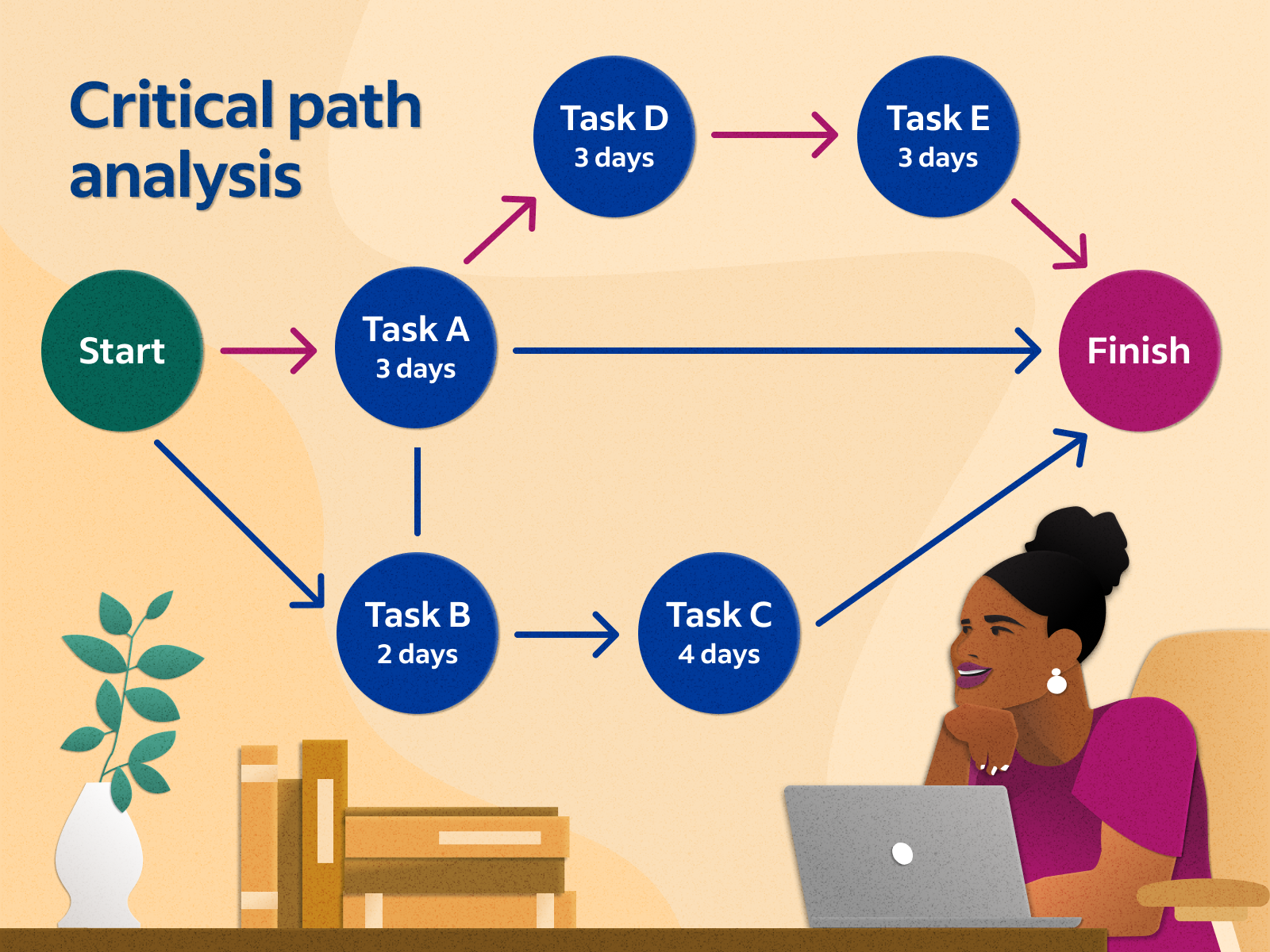
5.1. Critical Path Method (CPM):
Image Source: Indeed
CPM entails identifying the critical path—a sequence of tasks that determine the shortest duration for project completion.
By analyzing the critical path, project managers can pinpoint tasks that are crucial for project success and allocate resources accordingly.
CPM serves as a foundational technique for forecasting project timelines, providing a roadmap for project execution.
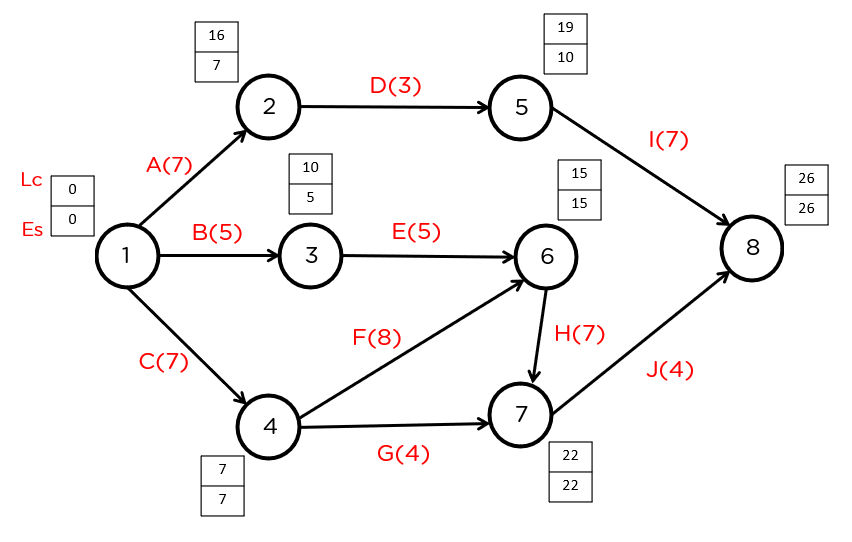
5.2. PERT (Program Evaluation and Review Technique):
Image Source: simplilearn.com
PERT employs a probabilistic approach to estimate project durations, considering optimistic, pessimistic, and most likely time estimates for each task.
By calculating weighted averages based on these estimates, project managers obtain a comprehensive view of project timelines, accounting for uncertainties and risks.
PERT facilitates a nuanced understanding of project dynamics, enabling managers to make informed decisions to mitigate potential delays.
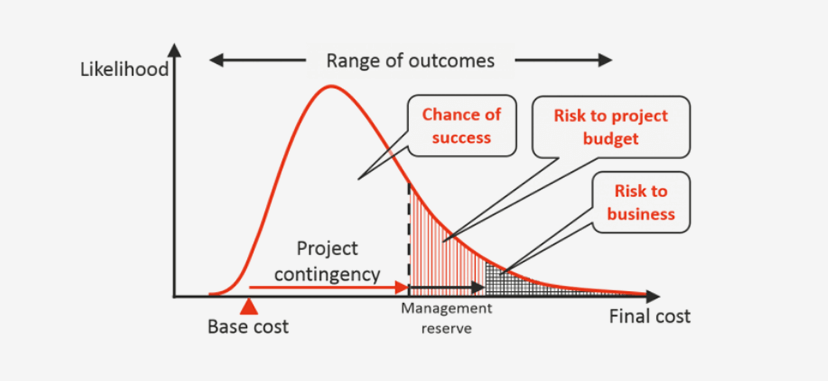
5.3. Monte Carlo Simulation:
Image Source: Bob Stanke
Monte Carlo Simulation leverages probability distributions to simulate various project scenarios and assess their impact on project timelines.
By iteratively running simulations based on input variables such as task durations, resource constraints, and external factors, project managers gain insights into the likelihood of meeting project deadlines.
Monte Carlo Simulation empowers managers to quantify project risks and devise contingency plans to address unforeseen challenges proactively.
6. Utilizing Historical Data for Accurate Forecasting:
Historical data serves as a treasure trove of insights for predicting future project timelines. By analyzing past project performances, project managers can discern patterns, identify potential bottlenecks, and refine forecasting models. Key considerations when leveraging historical data include:
Task Durations: Analyzing historical task durations provides valuable insights into the time required to complete similar tasks in future projects.
Resource Utilization: Examining resource allocation and utilization patterns enables managers to optimize resource allocation in future projects, enhancing operational efficiency.
External Factors: Historical data also sheds light on the impact of external factors such as weather conditions, regulatory changes, and supply chain disruptions on project timelines, enabling managers to factor in such variables during forecasting.
7. Importance of Flexibility in Time Management:
While forecasting project timelines is essential, project managers must also embrace flexibility in time management. Unforeseen events, changes in project scope, and evolving stakeholder requirements necessitate adaptability to ensure project success. Strategies for fostering flexibility include:
Contingency Planning: Allocating buffers in project schedules to accommodate unforeseen delays and mitigate risks.
Agile Methodologies: Embracing agile principles enables project teams to respond swiftly to changes, iterate on project deliverables, and deliver value incrementally.
Continuous Monitoring: Regular monitoring of project progress enables managers to detect deviations from the planned schedule early and take corrective actions promptly.
8. Critical Path: Measuring the Changes
The critical path is essential in construction project management, guiding teams toward timely completion by outlining key tasks that determine project duration. This section explores its nuances, significance, and strategies for maintaining project timelines amidst changes.
8.1. Identifying Critical Path Activities:
The critical path comprises a sequence of interdependent tasks that collectively determine the shortest duration for project completion. Identifying critical path activities involves:
Task Dependencies: Analyzing the dependencies between project tasks to identify the sequence of activities that directly impact project duration.
Duration Estimation: Estimating the duration of each task based on historical data, expert judgment, and resource constraints.
Forward and Backward Pass: Performing forward and backward pass calculations to determine the earliest start and finish times, as well as the latest start and finish times for each task.
Float Calculation: Calculating float or slack for non-critical path tasks to identify opportunities for schedule compression or resource optimization.
8.2. Monitoring Changes and Their Impact on Project Timeline:
Change is inevitable in construction projects, and managing changes effectively is paramount for preserving project timelines. Key considerations for monitoring changes and their impact on project timelines include:
Change Control Processes: Implementing robust change control processes to evaluate proposed changes, assess their impact on project scope, schedule, and budget, and make informed decisions.
Risk Assessment: Conducting risk assessments to anticipate potential changes and their implications on the critical path.
Regular Progress Updates: Maintaining regular communication and progress updates to monitor deviations from the planned schedule and take corrective actions promptly.
Mitigation Strategies: Developing mitigation strategies to address changes that impact the critical path, such as resource reallocation, schedule adjustments, and scope prioritization.
8.3. Adjusting Project Plan Based on Critical Path Analysis:
Adapting to changes necessitates adjustments to the project plan to ensure alignment with project objectives and timelines. Strategies for adjusting the project plan based on critical path analysis include:
Reevaluating Task Priorities: Reassessing task priorities based on their impact on the critical path and reallocating resources accordingly.
Fast-Tracking and Crashing: Exploring fast-tracking and crashing techniques to compress the project schedule by overlapping or expediting critical path activities.
Resource Optimization: Optimizing resource allocation to expedite critical path activities without compromising quality or safety.
Stakeholder Communication: Communicating changes to stakeholders and obtaining their buy-in for revised project timelines and deliverables.
9. Conclusion:
In conclusion, successful construction project management hinges on a seamless integration of personnel time management, strategic planning, and forecasting techniques. The foundation lies in prioritizing effective time management, which optimizes resources, minimizes delays, and ensures project success. By adopting planning strategies and utilizing project management tools, project managers can achieve efficient time management practices.
Forecasting emerges as a quintessential aspect of managing time on construction projects, enabling project managers to predict timelines with precision through techniques like the Critical Path Method, PERT, and Monte Carlo Simulation. Leveraging historical data further enhances the accuracy of forecasts, allowing managers to anticipate challenges and devise proactive strategies. Flexibility in time management is paramount, enabling project teams to adapt to changing circumstances and navigate uncertainties effectively.
Furthermore, the critical path serves as a guiding light, delineating the path towards timely project completion. Identifying critical path activities, monitoring changes, and embracing robust change control processes are essential for preserving project timelines amidst dynamic shifts. As construction projects evolve, vigilance, adaptability, and strategic decision-making remain indispensable for delivering outcomes that surpass expectations.
Together, these integrated components form a comprehensive approach to construction project management, ensuring projects progress smoothly and culminate in client satisfaction and project success.
10 Essential Steps to Master Work Breakdown Structure, WBS in Construction Management
Introduction:
Welcome to the third and final installment of our comprehensive journey into Work Breakdown Structure, WBS in Construction Management. In our previous articles, we laid the groundwork by introducing the core concepts and benefits of WBS in construction management. We then explored the creation of a tailored WBS and how to avoid common mistakes.
In Part 1: Chapter 1 & 2, we established the fundamentals of WBS and delved into its benefits in construction management. From clarity to efficient resource allocation, cost estimation, and risk identification, we highlighted the importance of WBS in managing construction projects.
In Part 2: Chapter 3 & 4, we continued our exploration, covering the creation of a tailored WBS for your construction project and steering clear of common WBS mistakes.
If you want to refer to the previous parts of this series, you can read them here:
Now, we're venturing deeper into the intricacies of Work Breakdown Structure. Chapter 5 explores the significance of adaptability and continuous improvement in construction project management, highlighting the dynamic nature of the industry and the need to stay ahead of the curve.
In Chapter 6, we delve into the essential roles played by consistency and documentation in effective project management, offering insights to ensure project success.
Table of Contents
Chapter 5: Embracing Adaptability and Continuous Improvement
Welcome back to our journey through the world of Work Breakdown Structure, WBS in construction management. In our previous segments, we've covered the core concepts, benefits, creation, and common mistakes of WBS. Now, it's time to explore two critical aspects: adaptability and continuous improvement.
Step 7: The Importance of Adaptability
Construction projects are dynamic by nature. New challenges arise, client requirements evolve, and unforeseen circumstances can change the course of your project. In this context, adaptability is a fundamental aspect of your WBS. Here's why:
7.1. Changing Project Scope
"As your construction project progresses, the scope may evolve due to client requests, unforeseen challenges, or even regulatory changes."
Your WBS should be flexible enough to accommodate these changes without compromising the project's integrity. It's like altering the course of a ship to navigate changing seas, ensuring you reach your destination.
7.2. Incorporating Technological Advancements
In today's construction landscape, technology plays a pivotal role. New tools, software, and methodologies are continually emerging. An adaptable WBS should incorporate these advancements to improve efficiency and productivity.
7.3. Meeting Stakeholder Expectations
Stakeholders' expectations can shift throughout the project. Your WBS should be adaptable enough to accommodate these changes while maintaining alignment with the original project scope. This ensures that all parties involved are satisfied with the project's progress.
Step 8: The Power of Continuous Improvement
In construction project management, stagnation isn't an option. Continuous improvement is the key to staying on the cutting edge. Your WBS is a valuable tool in this regard:
8.1. Regular Evaluation
"Consistently evaluate the effectiveness of your WBS. Identify areas for improvement and incorporate these changes to enhance your project management practices."
By regularly evaluating your WBS, you can spot areas that need enhancement. Whether it's simplifying certain processes or incorporating new best practices, ongoing evaluation ensures your project management stays efficient.
8.2. Learning from Past Projects
Each construction project is a learning opportunity. The lessons learned from previous projects can be used to refine your WBS. An adaptable WBS should allow for the incorporation of these lessons to boost efficiency in future projects.
8.3. Leveraging Technology
Incorporate modern project management software and tools into your WBS. These technologies can streamline your project management practices and improve overall project efficiency.
As you can see, adaptability and continuous improvement are integral to keeping your construction projects not only on track but also ahead of the curve. In the next part, we'll explore the final aspects of mastering WBS in construction management.
Stay tuned for the final part where we'll discuss the significance of consistency and documentation in the world of Work Breakdown Structure for construction management.
Chapter 6: The Vital Role of Consistency and Documentation
Welcome back to our journey through the world of Work Breakdown Structure (WBS) in construction management. In the previous sections, we've explored the core concepts of WBS, its benefits, creation, common mistakes to avoid, the importance of adaptability, and the power of continuous improvement. Now, we're diving into the essential roles played by consistency and documentation.
Step 9: The Significance of Consistency
Consistency is the linchpin of effective project management. In the context of your WBS, consistency ensures that every phase, task, and sub-task is structured and labeled uniformly. Here's why it matters:
9.1. Clear Communication
"Consistency in your WBS allows for clear communication within the project team."
Consistency ensures that every team member, regardless of their role, can navigate and understand the WBS. This uniformity of language and structure is vital for clear communication.
9.2. Ease of Training and Familiarity
When new team members join your project, a consistent WBS simplifies their onboarding process. It also facilitates familiarity with the project's structure and scope, leading to more efficient work.
9.3. Effective Technology Utilization
Modern project management often relies on technology. A consistent WBS streamlines the integration of project management software and tools. This consistency ensures that everyone in the team can efficiently use these tools to support the project.
Step 10: The Role of Documentation
Documentation is the backbone of any successful project. In construction management, it takes on particular importance. Here's how it complements your WBS:
10.1. Alignment with Project Schedule
"Documentation ensures that your WBS is closely aligned with the project schedule."
Project schedules, timelines, and milestones are documented aspects of your project. When these are aligned with your WBS, your team can easily monitor progress, identify delays, and stay on top of the project's timeline.
10.2. Facilitating Adaptability
Documentation provides a historical record of your project's journey. This record can be invaluable when adapting your WBS to changing circumstances. It offers insights into how your project has evolved and where adjustments may be necessary.
10.3. Aiding in Continuous Improvement
Documentation allows you to analyze past projects, identify best practices, and learn from your experiences. This knowledge can be used to improve your WBS, refine project management practices, and enhance project efficiency.
Incorporating consistency and documentation into your WBS practices can significantly boost the efficiency and effectiveness of your construction projects. As we wrap up our series on WBS in construction management, remember that the devil is indeed in the details, and mastering these details is the key to successful project management.
Additional Reads:
This article on archdesk.com provides an insight into WBS.
The article is a guide to work breakdown structures (WBS) for construction projects. A WBS is a visual project management technique that breaks down a project into smaller, more manageable tasks. The article explains the benefits of using a WBS, the three types of WBS, and how to create a WBS for a construction project. It also provides examples of WBS templates and explains how to turn a WBS into a schedule of works. The article concludes with a list of things to avoid when creating a WBS and tips for making the best use of a WBS.
Thank you for joining us on this exploration of Work Breakdown Structure in construction management. We hope this series has provided you with valuable insights into mastering this essential tool for successful project management in the dynamic world of construction.
Power Up Your Project Management Skills with Scheduling Software
Introduction
In the dynamic and demanding world of construction project management, staying ahead of the curve is essential for success. With intricate schedules, diverse teams, and unpredictable site conditions, managing construction projects can be a daunting task. However, the advent of scheduling software has revolutionized the way construction projects are planned, executed, and monitored, offering project managers an invaluable tool to enhance their skills and achieve remarkable outcomes.
Scheduling software has become an indispensable asset for construction project managers, providing a centralized platform to streamline tasks, allocate resources, and track progress with unparalleled precision. By harnessing the power of scheduling software, construction professionals can elevate their project management expertise, ensuring that projects are completed on time, within budget, and to the highest quality standards.
No more manual Scheduling of Activities
This comprehensive blog article delves into the transformative potential of scheduling software for construction project managers. We will explore the key features of scheduling software, unravel its practical applications, and showcase real-world examples of how it has propelled construction projects to new heights of success. Whether you are a seasoned construction professional or an aspiring project manager, this guide will equip you with the knowledge and insights you need to harness the power of scheduling software and elevate your construction project management skills to the next level.
Embrace the Power of Scheduling Software and Transform Your Construction Project Management Expertise
Table of Contents
Section 1: The Role of Scheduling Software in Project Management
Unveiling the Significance of Scheduling in Construction Projects
In the intricate realm of construction project management, scheduling stands as a cornerstone of success. A well-defined project schedule serves as a blueprint, guiding project execution, ensuring timely completion, and facilitating efficient resource allocation. However, crafting a comprehensive schedule amidst the complexities of construction projects can be a formidable challenge.
1.1: The Challenges of Manual Scheduling
Traditionally, construction project schedules were meticulously crafted by hand, a labor-intensive process prone to errors and inconsistencies. Manual scheduling often resulted in:
Inaccurate Estimations: Project durations and resource requirements were frequently underestimated, leading to delays and cost overruns.
Inefficient Resource Allocation: The allocation of labor, equipment, and materials was often inefficient, resulting in wasted resources and productivity bottlenecks.
Limited Visibility: Project managers lacked real-time visibility into project progress, hindering their ability to identify and address potential issues promptly.
1.2: The Transformative Power of Scheduling Software
Scheduling software has emerged as a game-changer in construction project management, offering a powerful solution to the challenges of manual scheduling. These sophisticated tools provide a centralized platform to:
Accurate Scheduling: Scheduling software enables the creation of precise project schedules based on historical data, industry benchmarks, and project-specific factors.
Optimized Resource Allocation: Scheduling software facilitates efficient resource allocation, ensuring that the right personnel, equipment, and materials are available at the right time.
Real-time Progress Monitoring: Scheduling software provides real-time visibility into project progress, enabling project managers to track deviations from the plan and take corrective action as needed.
1.3: The Benefits of Scheduling Software for Construction Project Managers
The adoption of scheduling software has yielded a plethora of benefits for construction project managers, including:
Reduced Costs: Scheduling software minimizes cost overruns by optimizing resource allocation and identifying potential delays early on.
Improved Timelines: Scheduling software helps projects stay on track by providing accurate estimations and facilitating efficient task management.
Enhanced Collaboration: Scheduling software fosters collaboration among project stakeholders, ensuring clear communication and coordination.
Increased Safety: Scheduling software identifies potential safety hazards and facilitates the implementation of preventive measures.
Elevated Project Success Rates: Scheduling software has been shown to increase project success rates by improving overall project planning, execution, and control.
Section 2: Essential Features of Scheduling Software
Scheduling software has revolutionized construction project management by providing a comprehensive suite of tools that streamline project planning, execution, and monitoring. To effectively harness the power of scheduling software, it is essential to understand the key features that make it an indispensable asset for construction project managers.
2.1. Task Management:
Effective task management is the cornerstone of successful project execution. Scheduling software empowers project managers to:
Construction Project Manager Using Scheduling Tools
Create and manage a detailed list of tasks, including descriptions, dependencies, and durations.
Assign tasks to specific team members or subcontractors, ensuring clear accountability.
Set deadlines for each task and track progress against those deadlines.
2.2. Resource Allocation:
Optimal resource allocation is crucial for maximizing productivity and minimizing wasted resources. Scheduling software allows project managers to:
Identify and inventory available resources, including personnel, equipment, and materials.
Match resources to specific tasks, considering skills, availability, and location.
Optimize resource utilization to ensure that resources are not idle or overloaded.
2.3. Time Tracking:
Accurate time tracking is essential for assessing project progress, identifying potential delays, and calculating labor costs. Scheduling software enables project managers to:
Track the time spent on each task by team members and subcontractors.
Compare actual time against estimated time to identify deviations from the plan.
Generate reports on time spent by task, team member, or project phase.
2.4. Gantt Charts:
Gantt charts are visual representations of project schedules, providing a clear overview of task durations, dependencies, and timelines. Scheduling software allows project managers to:
Scheduling With Gantt Charts
Create Gantt charts that visually depict project schedules.
Easily identify task dependencies and potential bottlenecks.
Track project progress against the Gantt chart, highlighting deviations and potential delays.
2.5. Kanban Boards:
Kanban boards are visual workflow management tools that facilitate collaboration and task prioritization. Scheduling software allows project managers to:
Scheduling With Kanban Boards
Create Kanban boards that represent the flow of tasks through different stages of the project.
Limit the number of tasks in progress to prevent bottlenecks.
Visualize task movement and identify potential delays or roadblocks.
2.6. Progress Tracking:
Real-time progress tracking is essential for identifying and addressing potential issues early on. Scheduling software provides project managers with:
Scheduling Tools for Progress Tracking
Real-time updates on task completion and project progress.
Visual indicators of project status, highlighting deviations from the plan.
Alerts for potential delays or issues, enabling proactive intervention.
2.7. Reporting and Analytics:
Project managers rely on comprehensive reports to make informed decisions and measure project success. Scheduling software provides:
Standard and customizable reports on project progress, resource utilization, and cost performance.
Data analysis tools to identify trends, patterns, and areas for improvement.
Insights into project performance and team productivity.
These essential features empower construction project managers to streamline project planning, execution, and monitoring, ultimately leading to improved project outcomes and enhanced professional success.
Section 3: Harnessing Scheduling Software for Project Management Success
Scheduling software has emerged as an indispensable tool for construction project managers, providing a comprehensive solution to the challenges of manual scheduling and propelling projects towards success. This section delves into the practical application of scheduling software, guiding construction professionals through the process of creating, managing, and utilizing schedules to enhance their project management expertise.
Step 1: Defining Project Scope and Requirements
The foundation of effective scheduling lies in a clear understanding of project scope and requirements. Before diving into scheduling software, construction professionals should:
Clearly define the project's objectives, deliverables, and milestones.
Identify all project tasks, including their descriptions, dependencies, and durations.
Estimate resource requirements, considering personnel, equipment, and materials.
Establish clear project deadlines and timelines.
Step 2: Creating a Comprehensive Project Schedule
With a clear understanding of project scope and requirements, construction professionals can leverage scheduling software to create a comprehensive project schedule. This involves:
Inputting project tasks, durations, and dependencies into the scheduling software.
Assigning tasks to specific team members or subcontractors.
Setting deadlines for each task and aligning them with project milestones.
Utilizing Gantt charts to visualize the project schedule and identify potential bottlenecks.
Step 3: Optimizing Resource Allocation
Efficient resource allocation is crucial for maximizing productivity and minimizing wasted resources. Scheduling software enables construction professionals to:
Visualize resource availability and identify potential conflicts.
Match resources to specific tasks, considering skills, availability, and location.
Optimize resource utilization by balancing workloads and avoiding idle resources.
Track resource usage and make adjustments as needed.
Step 4: Monitoring Project Progress
Real-time progress monitoring is essential for identifying and addressing potential issues early on. Scheduling software provides construction professionals with:
Real-time updates on task completion and project progress.
Visual indicators of project status, highlighting deviations from the plan.
Alerts for potential delays or issues, enabling proactive intervention.
Tracking actual time against estimated time to identify potential cost overruns.
Step 5: Adapting to Changes and Challenges
Construction projects are inherently dynamic, and the ability to adapt to changes and challenges is crucial for success. Scheduling software facilitates adaptability by:
Enabling easy updates to task durations, dependencies, and resource allocation.
Providing real-time visibility into project status, allowing for quick identification of changes.
Generating reports on project performance, highlighting areas for improvement.
Facilitating communication and collaboration among project stakeholders, ensuring everyone is on the same page.
Effective project management is an ongoing journey of learning and improvement. Scheduling software can support continuous improvement by:
Providing data-driven insights into project performance, identifying areas for improvement.
Facilitating the implementation of best practices and lessons learned from past projects.
Enabling the sharing of knowledge and expertise among project team members.
Promoting a culture of continuous improvement within the project team.
By harnessing the power of scheduling software and following these practical steps, construction professionals can elevate their project management skills, enhance project success rates, and position themselves as leaders in the industry.
Section 4: Case Studies of Successful Scheduling Software Implementation
The transformative power of scheduling software is not merely a theoretical concept; it is a reality that has been proven time and again in the dynamic world of construction project management. Numerous construction organizations have successfully implemented scheduling software, reaping significant benefits in terms of project efficiency, cost savings, and overall success. This section delves into real-world case studies that showcase the impact of scheduling software on construction projects.
Case Study 1: Skanska's Success with Primavera P6
Skanska, a global construction and development company, has successfully implemented Primavera P6 scheduling software across its vast portfolio of projects. By utilizing Primavera P6, Skanska has achieved:
Reduced project costs by an average of 10%.
Improved project timelines by an average of 15%.
Enhanced collaboration and communication among project stakeholders.
Skanska University Construction Project
Skanska attributes its success to the comprehensive features of Primavera P6, including its resource management capabilities, progress tracking tools, and reporting functionalities.
Case Study 2: Turner Construction's Procore Implementation
Turner Construction Project
Turner Construction, a leading construction management and general contracting firm, has adopted Procore scheduling software as its enterprise-wide solution. Procore has enabled Turner to:
Streamline project workflows and improve efficiency by 20%.
Enhance risk management and mitigate potential project delays.
Improve collaboration and communication among project stakeholders.
Turner credits Procore's user-friendly interface, cloud-based accessibility, and mobile app for its success.
Case Study 3: AECOM's Adoption of Oracle Primavera Cloud
AECOM, a global engineering and professional services firm, has successfully implemented Oracle Primavera Cloud scheduling software across its global operations. Oracle Primavera Cloud has enabled AECOM to:
Reduce project costs by 15% through improved resource allocation.
Improve project timelines by 20% through better project planning and execution.
Enhance collaboration and communication among project stakeholders.
AECOM attributes its success to Oracle Primavera Cloud's cloud-based accessibility, real-time collaboration features, and integration with other project management tools.
These case studies demonstrate the tangible benefits of scheduling software implementation in the construction industry. By harnessing the power of these tools, construction organizations can elevate their project management skills, enhance project success rates, and position themselves as leaders in the ever-evolving construction landscape.
The construction industry offers a wide range of scheduling software options, each with its unique features, capabilities, and target audience. To help construction professionals navigate this diverse landscape, we have compiled a list of recommended scheduling software options, tailored to different project types, team sizes, and budget considerations.
5.1. Primavera P6:
Primavera P6 is a comprehensive scheduling software solution widely used by large construction organizations and enterprises. It offers robust features for project planning, resource management, progress tracking, and reporting.
Primavera P6 Scheduling Software
Ideal for:
Large-scale construction projects
Complex projects with multiple dependencies
Organizations with a centralized project management structure
5.2. Procore:
Procore is a cloud-based project management software platform that includes scheduling capabilities. It offers a user-friendly interface, real-time collaboration features, and integration with other project management tools.
Procore Scheduling Software
Ideal for:
Medium-sized to large construction projects
Projects requiring collaboration among dispersed teams
Organizations seeking a centralized project management platform
5.3. Oracle Primavera Cloud:
Oracle Primavera Cloud is a cloud-based scheduling solution that offers similar features to Primavera P6. It is particularly well-suited for organizations with global operations and requires real-time collaboration across different time zones.
Oracle Primavera Cloud Scheduling Software
Ideal for:
Large-scale construction projects with global teams
Organizations with a distributed project management structure
Companies seeking cloud-based accessibility and real-time collaboration
5.4. Asta Powerproject:
Asta Powerproject is a powerful scheduling software solution known for its flexibility and customization options. It is suitable for a wide range of project sizes and complexity.
Asta Powerproject Scheduling Software
Ideal for:
Projects of varying sizes and complexity
Organizations requiring a flexible and customizable scheduling solution
Companies seeking a cost-effective alternative to enterprise-level software
5.5. Microsoft Project:
Microsoft Project is a widely used scheduling software solution known for its ease of use and affordability. It is suitable for small to medium-sized projects and teams.
Microsoft Project Scheduling Software
Ideal for:
Small to medium-sized construction projects
Organizations with limited IT resources
Companies seeking a user-friendly and affordable scheduling solution
5.6. Vico Project Management Software:
Vico Project Management Software is a 4D scheduling software solution that allows users to visualize project schedules in 3D. It is particularly well-suited for complex construction projects with intricate dependencies.
Recommended for: Complex construction projects, 3D visualization, advanced scheduling capabilities.
5.7. Buildxact:
Buildxact is a construction-specific scheduling software solution that integrates with estimation and project management tools. It offers features tailored to the construction industry, such as bid preparation and cash flow tracking.
Fieldwire is a mobile-first construction project management platform that includes scheduling functionality. It is particularly well-suited for teams that work in the field and require access to schedules on the go.
Recommended for: Field-based construction teams, mobile accessibility, real-time communication.
These recommended scheduling software options represent a diverse range of tools catering to different project needs and team sizes. When selecting the right software for your construction project, consider factors such as project size, complexity, team size, budget, and desired features.
Remember, effective scheduling software implementation is not just about selecting the right tool; it also involves training, adoption, and continuous improvement. By investing in the right software and supporting its successful integration into your project management processes, you can reap the myriad benefits of scheduling software and elevate your construction project management expertise to new heights.
Conclusion
Elevate Your Project Management Skills and Achieve Construction Excellence
In the ever-evolving world of construction project management, embracing technology and leveraging the power of scheduling software has become an essential ingredient for success. By harnessing the capabilities of these sophisticated tools, construction professionals can streamline workflows, optimize resource allocation, track progress in real-time, and adapt to changes and challenges effectively.
The case studies presented in this article highlight the transformative impact of scheduling software on real-world construction projects. Organizations that have successfully implemented scheduling software have reaped significant benefits in terms of reduced costs, improved timelines, and enhanced project success rates.
As you embark on your journey to elevate your project management skills, carefully consider the recommended scheduling software options presented in this article. Each option offers unique features and capabilities tailored to different project types, team sizes, and budget considerations. By carefully evaluating your specific needs and selecting the right solution, you can empower yourself to achieve construction excellence and deliver projects that surpass expectations.
Embrace the power of scheduling software, and watch your project management expertise soar to new heights, propelling you towards a future of construction success.
Understanding 9 Key Sustainability Risks in Construction
In the world of construction, a robust understanding of sustainability is not merely an option; it's a necessity. Sustainability risks in construction projects are becoming increasingly vital as the industry grapples with its environmental, social, and economic impacts. This blog aims to delve deep into these often overlooked aspects of construction sustainability, highlighting how they affect construction professionals, and shedding light on seldom-discussed intricacies that can make a substantial difference.
Table of Contents
Sustainability Risks in Construction Projects
Sustainability Risks: When we speak of sustainability risks in construction, we're talking about potential negative impacts on the environment, society, and the economy. These risks stem from various sources, including unsustainable materials and practices, excessive waste generation, and the gluttonous consumption of energy and water.
Let's categorize these sustainability risks into three broad domains:
Environmental Risks
Pollution:
Construction activities can inadvertently lead to pollution of the air, water, and soil. Dust from construction sites, emissions from vehicles, and the use of hazardous materials can all contribute to environmental pollution.
Habitat Destruction:
The construction process sometimes encroaches upon natural habitats, leading to a loss of biodiversity, an often underestimated impact on our ecosystems.
Climate Change:
The construction industry significantly contributes to climate change through the emission of greenhouse gases. Activities such as burning fossil fuels and manufacturing building materials have far-reaching consequences.
Social Risks
Displacement:
Construction projects may necessitate the displacement of individuals from their homes and communities. Land acquisition, difficult living conditions, and the demand for new development can lead to displacement, which often goes unnoticed.
Health and Safety Risks:
It's not just the environmental impact; construction poses health and safety risks for both workers and the public. Exposure to hazardous materials, dangerous working conditions, and noise and traffic hazards are all part of the package.
Community Impacts:
Communities near construction sites can bear the brunt of disruptions, including traffic congestion, property damage, noise pollution, and general inconveniences that are seldom discussed in the grand scheme of construction projects.
Economic Risks
Cost Overruns:
Construction projects often face cost overruns due to scope changes, unforeseen conditions, and poor project management. This aspect of sustainability is crucial for the economic viability of projects.
Delays:
Delays can have a significant economic impact. Whether caused by permitting issues, adverse weather conditions, or labor shortages, they can lead to lost revenue and increased costs.
Litigation:
Legal disputes in construction can stem from contractual issues, negligence claims, and environmental damage, leading to financial and time-related challenges that are rarely a focus of mainstream discussions.
Mitigating Sustainability Risks
So, how can we mitigate these sustainability risks in construction projects? The key lies in proactive measures taken at various stages:
Planning and Design:
When you begin a project, it's important to have a mindset focused on sustainability from the very beginning. This means considering and incorporating sustainable practices during the initial stages of project planning and design. Some key aspects of sustainable thinking include using materials that are environmentally friendly, designing for energy efficiency to minimize power consumption, implementing measures for water conservation, and ensuring that waste generation is kept to a minimum. By taking these factors into account, we can contribute to a more environmentally conscious and responsible approach to project development.
Construction Management:
When it comes to building things, we can do it in a way that's good for the environment. How? Well, by using vehicles and equipment that don't give off harmful emissions. We can also recycle and reuse materials instead of throwing them away. And let's not forget about managing waste properly. By doing all of this, we can make a big difference in both the environment and the economy.
Operation and Maintenance:
Even after the construction process is finished, the effort to achieve sustainability remains ongoing. This means employing energy-saving devices and equipment, adopting water-saving methods, and implementing food waste composting practices in order to maintain sustainability in the long run.
The goal of sustainability extends beyond the completion of construction. It involves utilizing appliances and tools that are energy efficient, implementing practices to preserve water, and even composting food waste. All these actions contribute to the long-term goal of achieving sustainability.
By implementing these recommendations, construction companies can make a substantial difference. They can reduce their environmental impact, enhance social and economic conditions, and create a more sustainable future.
For more insights, check out this reference article, which emphasizes the pressing need to address sustainability issues in construction.
In conclusion, as we move forward, remember that sustainability in construction isn't just a buzzword; it's a transformative concept that touches every aspect of our lives.
"The construction industry is one of the largest consumers of natural resources, using 60% of the world's natural resources directly or indirectly as construction materials for developing buildings and infrastructure. This has led to several sustainability issues, including global warming, loss of biodiversity and natural habitats, acidification, air pollution, toxicity, water resource pollution, and deforestation. These issues are caused by the manufacture, transportation, installation, utilization, maintenance, and disposal of construction materials. Sustainable construction methods are emerging to address these issues." - Reference Article
Embracing Sustainability in Construction: Real-World Examples and Practical Steps
In this segment, we'll delve deeper into the transformative journey of embracing sustainability in construction, backed by real-world examples and practical steps to make a meaningful impact.
A Strong Grasp of Sustainability Principles
Before we explore real-world examples, it's essential to lay a strong foundation by understanding the core principles of sustainability. It's not merely a matter of using eco-friendly materials; it's a comprehensive approach that takes into account environmental, social, and economic factors. To truly embrace sustainability, one needs to grasp these principles and incorporate them into every facet of construction projects.
Let's now examine some real-world examples that illustrate the power of sustainable construction practices:
Real-World Example 1: The Bullitt Center
Location: Seattle, Washington, USA
The Bullitt Center stands as a shining beacon of sustainability in the heart of Seattle. It's often referred to as the "greenest commercial building in the world." What makes it remarkable is its ability to generate more energy than it consumes. With solar panels covering its rooftop, rainwater harvesting, and composting toilets, the Bullitt Center sets a high standard for sustainability.
Key Takeaway: Real-world examples like the Bullitt Center demonstrate that with the right design and technology, it's possible to create buildings that are not just energy-efficient but can also give back to the grid.
Real-World Example 2: The Edge
Location: Amsterdam, Netherlands
The Edge, Deloitte's Amsterdam headquarters, is a prime example of a smart and sustainable office space. It incorporates cutting-edge technologies to maximize energy efficiency, including a smartphone app that allows employees to control the lighting and temperature at their desks. It's a testament to the integration of technology and sustainability.
Key Takeaway: The Edge showcases how technology can be harnessed to create an energy-efficient workspace that adapts to the needs of its occupants, contributing to both sustainability and employee well-being.
Real-World Example 3: The Greening of the High Line
Location: New York City, USA
The High Line is a unique example of urban sustainability. It's an elevated park built on a historic freight rail line. The project transformed an abandoned structure into a green oasis in the heart of Manhattan. The design incorporated indigenous plantings and used sustainable practices, leading to a thriving urban ecosystem.
Key Takeaway: The Greening of the High Line demonstrates the potential for sustainability in urban development. Even in densely populated areas, it's possible to create sustainable green spaces that benefit both the environment and the community.
Practical Steps for Sustainable Construction
Now that we've explored these inspiring examples, let's discuss practical steps that construction professionals can take to embrace sustainability in their projects:
Early Integration: Sustainability should be integrated from the project's inception. It's not a last-minute add-on but a fundamental aspect of the design and planning phases.
Material Selection: Choosing sustainable building materials can significantly reduce the environmental impact. Look for materials with low embodied energy and a minimal carbon footprint.
Energy Efficiency: Focus on energy-efficient design, including proper insulation, high-efficiency HVAC systems, and renewable energy sources like solar panels.
Water Conservation: Implement water-saving measures, such as low-flow fixtures and rainwater harvesting systems, to reduce water consumption.
Waste Management: Minimize waste generation through recycling and reusing materials. Dispose of hazardous materials responsibly.
Community Engagement: Engage with the local community to address their concerns and ensure your project benefits, rather than disrupts, the community.
In conclusion, sustainability in construction is a multifaceted journey that requires a deep understanding of its principles and a commitment to incorporating them at every stage. Real-world examples show that it's not only possible but also highly rewarding. By taking practical steps, the construction industry can contribute to a more sustainable and prosperous future.
If you are interested in reading more on sustainability on our website:
Career Path in Construction Project Management: Part 2
Advancing Your Construction Project Management Career
Welcome back to the second part of our series on building a successful career path in Construction Project Management. In this segment, we will explore salary expectations and the job outlook in India and the Middle East, common challenges faced in construction management, and how to overcome them. We'll also discuss the importance of networking, setting career goals, and nurturing your passion for this field.
If you want to refer to the previous article in this series, please find it here:
Understanding salary expectations and job prospects in your region is essential for career planning. In India, the construction industry has been on a steady growth trajectory, with infrastructure projects, residential and commercial development, and an increasing emphasis on sustainable construction practices.
Salary: The salary for construction management professionals in India can vary significantly based on factors such as location, experience, and the specific role. As of 2021, the average annual salary for entry-level construction managers in India was around 3-5 lakhs INR. However, experienced professionals could earn significantly higher, ranging from 8-20 lakhs INR or more, depending on their expertise and the region.
Job Outlook: The demand for skilled individuals with project management expertise remains strong in India. The ongoing infrastructure projects and the industry's focus on sustainability provide ample opportunities for career growth.
Step 12: Salary and Job Outlook in the Middle East
The Middle East, particularly countries like the United Arab Emirates (UAE), Saudi Arabia, and Qatar, has been a hotspot for construction and infrastructure development.
Salary: As of 2021, construction management professionals in the Middle East typically earned higher salaries compared to many other regions. Entry-level salaries might start at 10,000 to 20,000 AED or more per month. Experienced professionals in senior roles could earn significantly more, often exceeding 30,000 AED per month. The exact figures may vary depending on your qualifications, experience, and location.
Job Outlook: The Middle East has been a hub for major construction projects, including mega infrastructure and real estate developments. While the job market can be competitive, experienced construction management professionals often find opportunities for well-compensated positions. The region's commitment to ambitious construction projects suggests a continued demand for skilled professionals in construction management.
Step 13: Challenges and Solutions
Every career path comes with its set of challenges, and construction management is no exception. Common challenges include budget overruns, project delays, safety issues, and conflicts with stakeholders. Here's how to tackle them:
Thorough Project Planning: Careful planning, including detailed project schedules and cost estimates, can help you prevent budget overruns and project delays.
Risk Assessment: Identify potential risks early in the project and develop strategies to mitigate them.
Effective Communication: Open and transparent communication with your team and stakeholders is crucial. Address issues promptly and proactively.
Proactive Problem-Solving: Be prepared to tackle challenges as they arise. The ability to think on your feet and adapt to changing conditions is invaluable.
Safety Protocols: Implement and enforce strict safety protocols to prevent accidents and injuries on the construction site.
Conflict Resolution Strategies: Conflicts are bound to happen, but having effective conflict resolution strategies in place can help maintain project harmony.
Step 14: Networking and Career Development
In the world of construction management, networking is a powerful tool for career development. Building relationships with industry peers, mentors, and potential employers can open doors to new opportunities.
Industry Associations: Joining industry associations, such as the Project Management Institute (PMI) or the American Society of Civil Engineers (ASCE), can connect you with like-minded professionals and provide access to valuable resources.
Networking Events: Attend conferences, seminars, and workshops to meet people in the field. These events offer insights into the latest trends and technologies.
LinkedIn and Online Communities: Leveraging social media and online communities can help you stay connected with professionals in your field and share knowledge.
Project Management Courses: Consider enrolling in project management courses that offer networking opportunities.
Step 15: Passion and Dedication
Your passion for construction management can be a driving force in your career. It's the dedication to your craft that can set you apart. Passion fuels your desire to learn, adapt, and excel in this dynamic field.
Resilience: The construction industry can be demanding, but resilience is your ally. It helps you weather challenges and come out stronger.
Time Management: Effective time management allows you to balance your professional and personal life while maintaining your commitment to excellence.
Risk Management: Understanding and managing risks efficiently is a critical part of your job. It's a skill that sets apart seasoned professionals from novices.
Quality Focus: Delivering high-quality work is not just a job requirement; it's a reflection of your dedication and passion for your career.
Step 16: Environmental and Sustainability Practices
As the construction industry evolves, sustainability practices become increasingly important. Understanding green building practices, energy efficiency, and the use of eco-friendly materials can enhance your marketability and contribute to a more sustainable future.
Step 17: Legal and Regulatory Compliance
Navigating the legal and regulatory landscape is a vital aspect of construction management. Staying informed about the latest laws and regulations ensures that your projects remain compliant and avoids legal complications.
Step 18: Continual Learning
Construction management is a dynamic field that continually evolves with new technologies and practices. Commit to lifelong learning to stay ahead of the curve.
In this second part, we've explored salary expectations, job prospects, challenges, networking, and the importance of passion and dedication in your construction management career. As you move forward, remember that your journey is as unique as you are, and each step you take contributes to your success.
"Success is not the key to happiness. Happiness is the key to success. If you love what you are doing, you will be successful."
Albert Schweitzer
Don't forget that your commitment to learning and adaptability will be your greatest allies in the ever-evolving world of Construction Project Management. Continue striving for excellence, and you'll find your career path in this industry to be both fulfilling and rewarding.
Thank you for joining us in this two-part series. We wish you all the best in your journey to building a successful career in Construction Project Management.