In this article, we will try to ascertain the best construction project management software based on different criteria such as the medium of usage, size of project or organization, etc.
Have you ever wondered how much time has been saved in your life by simple software such as a calculator on your desktop or smartphone? And how many times the same application has helped you avoid making costly mistakes of erroneous calculations.
Now, imagine the amount of time and money that has been saved globally by software’s which help streamline, track, control, and enhance the various construction activities.
Construction Project Management Softwares have arguably been pivotal in ensuring faster delivery of projects with cost savings, quality improvements, and enhanced safety at the site. With the increasing complexity of projects and shorter delivery timelines, these software’s have aided the project managers in making key decisions for projects successfully over the years.
What is Project Management Software?
A project management software is used for project planning, scheduling, resource allocation, cost management, contract administration, risk management, and change management. When we specifically talk of construction project management software, it is a tool or a set of tools used by professionals which helps in streamlining and simplifying the construction management process. Construction project management software helps bridge the gap between various activities of a construction project. Therefore, for a project manager having the right tools to perform his/ her duties becomes essential.
Why use project management software?
Coming to think of what are the benefits of project management software, it is clear that they help save time by automating repetitive tasks and in the process reduce errors in reporting.
Project management software should be used to serve the following purposes:
Maintain a database of the project in a single repository
Schedule and plan project milestones
Track resource distribution and utilisation
Allocate project budget and perform cost control activities
Document change management and manage project risk
Create clear communication channels
Key benefits of construction project management software:
Time-saving with document search and queries
Streamlining of the project process
Ensuring proper monitoring of project costs
Improving collaboration among stakeholders
Ensuring project efficiency enhancement
What does project management software do?
Project management software should have the following key functionalities:
Accounting and Financials
Team management
Project management
Document management
Material management
Health and safety management
What to look for in project management software?
An ideal project management software should be able to produce analytical reports, visual charts and assist in the decision-making process to the project managers.
The most common type of reports expected of project management software are:
Gantt charts
Kanban charts
Project and personnel calendars
Balance statements
Bidding and contract management
Reporting and dashboard customisation
In the next section, we will look at the best project management software available for enterprise and small businesses.
What is the best project management software for Enterprise?
Commercial construction project management software can be classified into two broad categories, Cloud-based construction project management software and on-premise construction project management software. The list we share here is a mix of both types of software with their ideal usage purpose.
GanttPRO
As the name suggests GanttPRO creates Gantt Charts for project management and that is the applications key strength. It allows for the collaboration of the project through breaking down of a project into tasks and subtasks with all dependencies being defined during the planning stage. A simple intuitive application with easy to set up for individual or team environment requirements.
Key features of the software include:
Critical path and auto-scheduling option
Establishing dependencies among the various tasks of the project
Resource and cost management
Project and personnel calendars – easier visual interface
Team collaboration through the task management
Ideal for small business aiming to streamline its project management activities. Visual cues in the form of charts and graphs also help the project managers make quick and meaningful decisions based on the project progress and requirements.
BIM360
Arguably the most popular among all the other tools (more as a document repository system than as a project management application) BIM360 is a product from the house of Autodesk. It is an online project management system specifically designed to cater to the needs of the construction industry. With its robust integration with BIM applications such as Revit and document control system, it has fast grown in popularity and acceptance across the construction industry.
Key features of the software include:
Design tool (revit, acad, sketch) integration
Document publishing and version controlling
Key performance indicators defining and tracking
Quality control and construction tracking
Customisable reports and dashboards
Viewing and managing field data
Ideal for an enterprise-level solution. The cloud-based application with its strong construction tracking, BIM integration and customisable dashboards & reports makes it the most ideal application for large scale complex projects construction management.
CoConstruct
CoConstruct is a cloud-based mobile construction management service. Thanks to its deep customisation option it caters to the needs of clients, contractors as well as design-build firms. It comes with the features to be able to manage projects right from the pre-bid stage until the project closure. With a host of integrations made possible, you can even integrate branding and marketing to suit your needs. The software comes with added features for design-build agencies and real estate developers.
Key features of the software include:
Tracking and managing leads
Bidding and proposals management
Accounting software integration
Budgeting, forecasting and estimating
Customisable mobile application with own branding option
To-do list interface for easier tracking
Jobsite activity tracking and timesheet management
Personalised branding and marketing
CoConstruct is the most conducive for operating needs of clients, contractors and design-build firms. With its customisation and personalisation of branding, it is an ideal choice for all client-facing interfaces of the business.
Knowify
Knowify is a cloud-based construction project management software. It boasts of features such as full integration of bidding, purchasing, time tracking, job costing, budgeting and real-time labour monitoring.
Key features of the software include:
Bid management with e-signature
Job scheduling for all tasks and job costing
Time tracking and invoicing
Syncing with other invoicing applications such as Quickbooks
Budgeting and PO tracking
Change management and mobile app for on-field tracking
Email notifications and dashboard reporting.
Overall Knowify is a preferable tool for organisations which want to remain asset-light and agile in nature. Its robust integration across disciplines and mobile application for on-field tracking make it a great choice for a complete project management solution.
PlanGrid
PlanGrid delivers real-time project information. It has the capability to annotate and markup the plans with notes, photos from the site directly with its mobile app support.
Key features of the software include:
Document Management
Progress tracking
Site reporting
Ideal for both small businesses as well as enterprises. Provides the flexibility to scale to large projects. Will work best for small firms aiming to grow to larger project management without disrupting the workflow and software knowledge.
To know more about the Construction Project Management industry and educational options to get certified as a Construction Project Management Professional do read our article:Construction Project Management Overview
To know more about the books you can read to improve on the project management aspects during education and for your practice, you can check out this article:Best Construction Project Management Books List
Did you find this list useful? Do you have any other software of your recommendation? Which one do you think is best for small businesses? Let us know in the comments section what you think of this list.
Construction project management is the art of tying together various construction tasks, such as planning, organizing, staffing, scheduling, supervising, budgeting, controlling, and closing, while meeting the project specifications. To help project managers make key decisions, construction managers use a number of project management tools. Communication, including project management meetings, is also essential because it keeps everyone on the same page.
State of Construction Industry
The construction industry is the largest industry in the world. Growth in this industry is an indicator of the economic conditions of a country. This is because the construction industry consumes a wide employment circle of labour.
It is more of a service industry than a manufacturing industry. While the manufacturing industry exhibits high-quality products, timeliness of service delivery, reasonable cost of service, and low failure rates, the construction industry is generally the opposite.
Most of the projects exhibit cost overruns, time extensions, and conflicts among parties.
Example of a magnificent project that suffered from huge cost overruns: Sydney Opera House costed about 14 times more than what was initially planned.
The construction industry is more challenging than other industries due to its unique nature. Every project is one of a kind and conflicting parties are always involved.
Thus, a project is defined whether it is in construction or not by the following characteristics:
A defined goal and objective
Specific tasks to be performed
A defined beginning and end
Resources being consumed
The goal of construction projects is to build something. What differentiates the construction industry from other industries is that its projects are large, built on-site and generally unique. It requires money, labour, equipment, and materials as well to complete. In spite of being one of the major economic indicators of a country, the construction industry has long been criticized for the poor performance with respect to many projects failing and or not meeting the expectations. This lack of performance leads to a huge percentage of wastage of the invested money and time.
For example, in the US every 1 billion dollars invested 122 million dollars gets wasted. These failures can be attributed to the challenging nature of this industry.
Another stark example can be seen in China: many construction projects are slowed down considerably due to government anti-corruption efforts. According to China Construction Bank, 15 of 26 of China’s top 100 listed companies, including Fosun Group, China Railway Group, China National Machinery Industry Corporation, China Southern Power Grid, and Sinopec, have suffered from asset impairment. The government is trying to tighten control over the investment industry and impose stricter capital controls.
The challenges faced in construction industry:
Hyper-competition
Every project is unique
Involvement of many contracting parties
High risk involved.
To overcome these challenges every project requires clarity in overall vision, goals and objectives. The other reasons for the failures of a construction project such as:
Inaccurate estimate due to miscalculation, specification errors, omissions, excluded permits and changing market conditions.
Scope creep, i.e, the amount of work grows beyond the original agreement.
Unreliable and unskilled labour
Unclear specifications
Communication gap between the parties
Financing issues
Improper planning
This shows that unsophisticated strategic planning makes it difficult in making accurate market predictions and then leads to the project failure. here comes the need for “Construction Project Management” which is defined as “an art and science of coordinating people, equipment, materials, money, and schedule to complete a specified project on time and within approved cost”
One of the most important principles of construction project management is the necessary balance between scope, budget and schedule without compromising on quality. This should be recognized in every project during the early development as well as during design and construction which can turn the project successful.
Did you know that the construction industry employs roughly 51 million people and accounts for 9% of the country’s GDP?
And when you combine the unorganized sector and allied services it provides for another 45 million jobs. It is forecasted that over the next few years it is going to add another 16 million jobs to the market.
The irony is that 45% of the construction industry in India is unregulated.
The small and medium scale projects get built without proper construction management leading to wastage and cost overruns.
If you are a fresher or just completing your 12th/ 10+2 education and are wondering which career to move towards then Construction Project Management is one of the best bets to get into and in the process help in the Nation Building process.
To give you a better understanding of what construction project management is, how to enroll, what you’ll study, and what kind of jobs you can get into later in the market…read along.
What is Construction Project Management
Building project management is the construction project management process. However, in contrast with other types of projects, when you talk regarding handling a project, the difference is primarily that the project is mission-based. This means the coordination of the project finishes at the completion of the project building.
According to the Construction Management Association of America (CMAA), construction managers (CMs) oversee the construction of a project.
As construction project management is a highly specialized subject, most of the organizations looking to hire a construction manager or construction project manager would aspire to have candidates with a degree or specialization in this subject.
So it becomes important for you to know what all is needed as prerequisites to take up this course and what you learn in this course. Let’s now take a look at it.
Image here
To be able to pursue a speacialation in construction project management in India, you need to be an Architect or a Civil Engineer. However, for a PMP certification course which gives you the ability ot apply for any general management roles you can be a graduate from any field.
What do you learn in the construction project management course?
Construction Project Management course teaches the process of planning, coordination, budgeting and supervision of the construction project.
It is usually a two years masters or PG certification program where you’ll be taught about:
Project Management process (according to PMBOK and APMBOK)
Finance Management
Human Resource Management
Material Management
Machinery Management
Risk management
Health and Safety Management
Construciton Regualatory and Legal Framework understanding
Image here
What are your roles as a Construction Project Manager?
As a construction project manager, you will be expected to manage all the construction activities of a construction project.
The role of a construction project manager broadly includes:
Estimating project costs
Negotiating and controlling project costs
Formulation of budget
Creating and maintaining schedules
Communicating with clients, stakeholders
Coordinating and working with architects, building specialists, regulatory specialists
Managing the construction activities at the site
Managing the resources at site including: workmen, machinery and materials at site
Providing guidance and feedback to all the project governance personnel
Image here
What is the difference between construction management and project management?
A construction manager manages the construction activities of a construction site whereas the project manager manages the overall aspects of the project. The construction project manager manages multiple site activities and plays a consultant role to a project manager.
A construction manager reports to a project manager. A project manager reports to a project director and a project construction manager is consulted by the project manager to govern the construction activities.
A project manager is usually involved from the inception stage of the project and oversees the overall deliverability of the project, whereas a construction manager is involved just before the commencement of construction activity of a project. The construction project manager, however, is involved at the organisational level and provides the direction needed for the project manager to formulate the project.
Image here
Best Construction Project Management Courses in India
Most of the reputed and premier institutes in India offer a PG or a Certification course in Construction Project Management.
A full-time course is preferable to pursue, as it helps with more than just education. The benefits of a full-time course are:
Ability to connect with the industry personnel through seminars and workshops as part of the curriculum.
Alumni status of the institute gives access to the resources and contact of industry personnel to collaborate and grow with
Exposure to live construction sites and projects as part of the curriculum is vital to understanding the industry and its workings thoroughly.
The trend in India as of today signals that a full-time course is given more weightage in comparison to a correspondence course by the hiring agencies. This trend is however gradually shifting towards accepting correspondence courses also with the same enthusiasm as a full-time course.
Project Management Certification courses in India
NICMAR campus offers both full-time and correspondence courses in construction project management. It is the most respected and recognized institute both in and outside India.
IIT’s also have Construction Management, Project Management for Construction, and Construction Project Management degrees being offered.
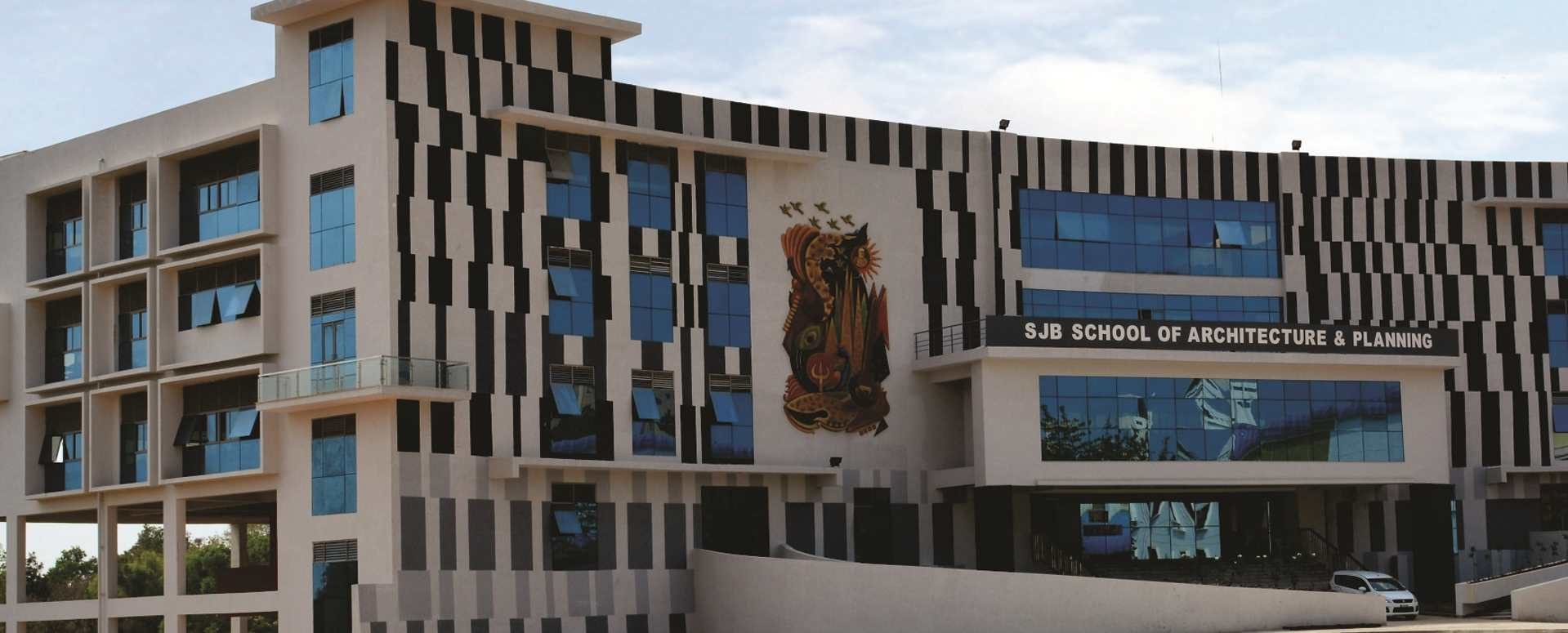
SJB School of Architecture and Planning, Bengaluru
Project Management Certification Online: is it worth it
In reality, a complete Construction Project Management Certification course is not really conducive online as you need to have at least a few practical sessions with onsite (project site) experience to really become a successful construction project manager.
Having said that, NICMAR does offer a correspondence PG Diploma course in Construction Project Management.
Alternatively, there are PMP training certification courses offered by Simplilearn, Unacademy, Udemy, and Coursera which can help you with a general understanding of management principles (PMBOK and APMBOK). You can then take up a diploma course in construction management offered by IGNOU or other universities locally to gain the knowledge needed to fulfill the role of a construction project manager.