Project Management, Resource Management
Factors Influencing the Planning and Selection of Construction Equipment
In the world of construction, the construction equipment selection can make or break a project. It's like selecting the right tools for an intricate job; precision matters. The planning and selection of construction equipment is a complex task that involves numerous considerations. In this article, we will unravel the various factors that influence this decision-making process.
The Critical Role of Construction Equipment
Before we dive into the factors influencing equipment selection, it's important to understand the significance of construction equipment in any project. Construction equipment is the muscle behind the vision. From bulldozers reshaping landscapes to cranes hoisting materials to great heights, these machines are the heartbeat of construction.
"Good fortune is what happens when opportunity meets with planning." – Thomas Edison
Factors Influencing Equipment Selection
1. Project Scope and Requirements
The foundation of equipment selection is understanding the project's unique demands:
- Project Size: The scale of the project, whether it's a small-scale residential construction or a massive infrastructure endeavor, determines the types and sizes of equipment needed.
- Complexity: Complex projects may require specialized equipment or attachments to tackle unique challenges.
- Duration: The project timeline influences the choice between buying, leasing, or renting equipment.
2. Budget Constraints
Financial considerations play a pivotal role:
- Capital vs. Operational Costs: Balancing the initial acquisition cost with ongoing operational and maintenance expenses is essential.
- Financing Options: Exploring financing options such as equipment leasing can help manage upfront costs.
3. Equipment Availability and Lead Time
Equipment availability and lead time are crucial:
- Market Availability: The region's equipment market availability can impact selection.
- Lead Time: Some specialized equipment may have longer lead times for procurement, which must align with project schedules.
4. Operational Efficiency and Productivity
Efficiency is key to project success:
- Fuel Efficiency: Fuel consumption impacts operational costs and environmental considerations.
- Productivity Features: Considering equipment features that enhance productivity, such as automation or advanced technology.
Understanding equipment capabilities and specifications is vital:
- Equipment Type: Choosing the right type of equipment for the task, whether it's earthmoving, material handling, or specialized machinery.
- Capacity and Power: Ensuring the equipment can handle the required loads and tasks efficiently.
6. Maintenance and Serviceability
Maintenance requirements and serviceability are essential for long-term cost management:
- Maintenance Needs: Assessing the maintenance needs and availability of service providers.
- Spare Parts Availability: Evaluating the availability and cost of spare parts.
7. Environmental and Regulatory Compliance
Meeting environmental and regulatory standards is non-negotiable:
- Emissions: Considering emissions standards and environmental impact when selecting equipment.
- Safety Features: Ensuring equipment complies with safety regulations to protect workers.
8. Site Conditions and Accessibility
Site-specific conditions influence equipment selection:
- Terrain: Evaluating the type of terrain and ground conditions where the equipment will operate.
- Accessibility: Assessing how easily equipment can access and maneuver within the construction site.
9. Resale Value and Depreciation
The long-term financial implications of equipment ownership:
- Resale Value: Assessing the potential resale value of equipment at the end of its useful life.
- Depreciation: Considering the rate of depreciation and its impact on the project's financials.
10. Project Timeline and Deadlines
Meeting project milestones and deadlines is critical:
- Equipment Delivery: Ensuring that equipment delivery aligns with project schedules.
- Backup Plans: Having contingency plans in place for equipment breakdowns or delays.
11. Safety and Risk Management
Prioritizing safety to minimize risks:
- Safety Records: Evaluating the safety records and history of equipment models and manufacturers.
- Risk Assessment: Performing risk assessments to identify potential hazards associated with equipment use.
12. Operator Skill and Training
The skill level of equipment operators is crucial:
- Operator Training: Ensuring that operators are trained and certified to operate specific equipment safely and efficiently.
13. Technology Integration
Technology is increasingly integrated into construction equipment:
- Telematics: Exploring equipment with telematics systems for real-time monitoring and data collection.
- Automation: Considering equipment with automation features for improved accuracy and efficiency.
14. Supplier and Manufacturer Reputation
The reputation of suppliers and manufacturers matters:
- Reliability: Choosing reputable suppliers known for reliable equipment.
- Support: Ensuring the supplier offers adequate support and warranty options.
Conclusion
In the realm of construction, the planning and selection of equipment is akin to assembling a well-orchestrated symphony. Each factor, from project requirements to budget constraints and environmental considerations, plays a unique role in this orchestration. A well-thought-out equipment selection process is a testament to project success, where the right equipment, used efficiently, can turn construction dreams into reality.
Understanding and navigating these influencing factors is essential for both budding construction professionals and seasoned experts in the field. In the end, it's the harmonious interplay of these factors that ensures that construction projects rise, quite literally, to new heights.
Remember, it's not just equipment; it's a carefully calculated choice that brings construction visions to life.
Project Management, Resource Management
Understanding Construction Equipment Management
In the world of construction, where projects soar to great heights and stretch across vast landscapes, the backbone of success lies in the careful management of construction equipment. Whether it's towering cranes on a skyline or earthmovers shaping the terrain, efficient handling of these mechanical workhorses is indispensable. This article aims to provide a comprehensive understanding of Construction Equipment Management, a critical facet of construction project success.
The Foundation: What is Construction Equipment Management?
Construction Equipment Management is the art and science of strategically planning, acquiring, operating, maintaining, and disposing of construction equipment. It involves a meticulous approach to ensure that the right equipment is in the right place at the right time, in optimal condition, and used efficiently throughout the construction project's lifecycle.
Key Components of Construction Equipment Management
- Equipment Selection and Procurement:
- Needs Assessment: Identifying the specific equipment required for the project based on project scope, size, and complexity.
- Procurement: Acquiring equipment through purchase, lease, or rental, considering factors like cost, availability, and project duration.
- Asset Allocation and Utilization:
- Optimal Allocation: Ensuring that equipment is assigned to tasks where it can be most productive, minimizing downtime and idle resources.
- Utilization Monitoring: Tracking equipment usage, fuel consumption, and operator efficiency to identify areas for improvement.
- Preventive Maintenance:
- Scheduled Inspections: Implementing a routine maintenance schedule to inspect and maintain equipment, preventing breakdowns and extending lifespan.
- Repairs and Servicing: Timely repairs and servicing to address wear and tear, ensuring safe and efficient operation.
- Safety and Compliance:
- Safety Standards: Enforcing safety protocols and ensuring equipment complies with safety regulations to protect workers and avoid accidents.
- Environmental Compliance: Adhering to environmental standards, including emissions control and waste disposal.
- Asset Tracking and Documentation:
- Record Keeping: Maintaining detailed records of equipment maintenance, repairs, usage, and costs for accountability and decision-making.
- Asset Tracking Systems: Using technology like GPS and RFID to track equipment location and performance in real-time.
- Replacement and Disposal Strategies:
- Lifecycle Analysis: Determining the optimal time for equipment replacement or upgrades based on factors like maintenance costs and depreciation.
- Disposal: Managing the retirement or sale of equipment in an environmentally responsible manner.
- Budgeting and Cost Control:
- Budget Planning: Developing equipment budgets that include acquisition, operation, maintenance, and disposal costs.
- Cost Monitoring: Regularly reviewing and controlling equipment-related expenses to ensure projects stay within budget.
The Significance of Construction Equipment Management
Now that we've outlined the key components, let's delve into why Construction Equipment Management is crucial:
1. Enhanced Efficiency:
Efficient equipment management reduces downtime, ensuring that construction projects progress according to schedule. When the right equipment is readily available and well-maintained, project timelines are met, and delays are minimized.
2. Cost Savings:
Effective maintenance practices and optimized equipment allocation result in cost savings. Preventing breakdowns and addressing issues promptly reduces repair costs and enhances fuel efficiency, contributing to the project's financial health.
3. Safety First:
Construction sites are inherently hazardous, and equipment-related accidents can be devastating. Adhering to safety standards and conducting regular equipment inspections ensures a safer work environment and minimizes accidents.
4. Resource Optimization:
Proper equipment allocation ensures that resources are used efficiently. Idle equipment represents wasted resources, and Construction Equipment Management helps maximize resource utilization.
5. Project Success:
Efficient equipment management directly impacts project success. It contributes to meeting deadlines, maintaining quality standards, and ultimately delivering a successful construction project.
The Role of Construction Equipment Management in the Industry
Construction Equipment Management plays a pivotal role in the construction industry. It's not a standalone function but rather an integral part of construction project management. Construction managers, equipment managers, and project teams collaborate to ensure that equipment is procured, operated, and maintained efficiently to meet project goals.
Conclusion
In the dynamic world of construction, where every project presents unique challenges, Construction Equipment Management is the key to success. It's the invisible force behind the scenes, ensuring that construction equipment operates like a well-oiled machine. Understanding the intricacies of equipment management is essential for students pursuing a Master's in Architecture or professionals in Construction Project Management. It equips them with the knowledge and skills needed to make informed decisions about equipment selection, operation, and maintenance, ultimately contributing to the success of construction projects.
In summary, Construction Equipment Management is the linchpin that keeps the construction industry moving forward. It's the bridge between vision and reality, ensuring that projects are not just built but built efficiently, safely, and within budget.
Project Management, Finance Management, Resource Management
The Straight-Line Method of Depreciation
In the realm of accounting and asset management, depreciation is a concept that plays a pivotal role, particularly in industries like construction. Among the various methods used to calculate depreciation, the Straight-Line Method stands out as one of the simplest yet most widely employed. In this article, we will explore what the Straight-Line Method of depreciation is, how it works, and why it matters in the context of construction and other industries.
Understanding Depreciation
Before delving into the specifics of the Straight-Line Method, let's grasp the essence of depreciation itself. Depreciation is the process of allocating the cost of a tangible asset over its useful life. In simpler terms, it's a way of accounting for the wear and tear, obsolescence, and aging that assets undergo as they are used in a business.
Depreciation serves two essential purposes:
- Financial Reporting: Depreciation expenses are recorded on a company's income statement, reflecting the reduction in the asset's value over time. This is crucial for accurate financial reporting and tax compliance.
- Asset Replacement Planning: Depreciation helps businesses plan for the eventual replacement or upgrade of assets. By understanding how much an asset has depreciated, a company can budget for its replacement when the time comes.
The Straight-Line Method Demystified
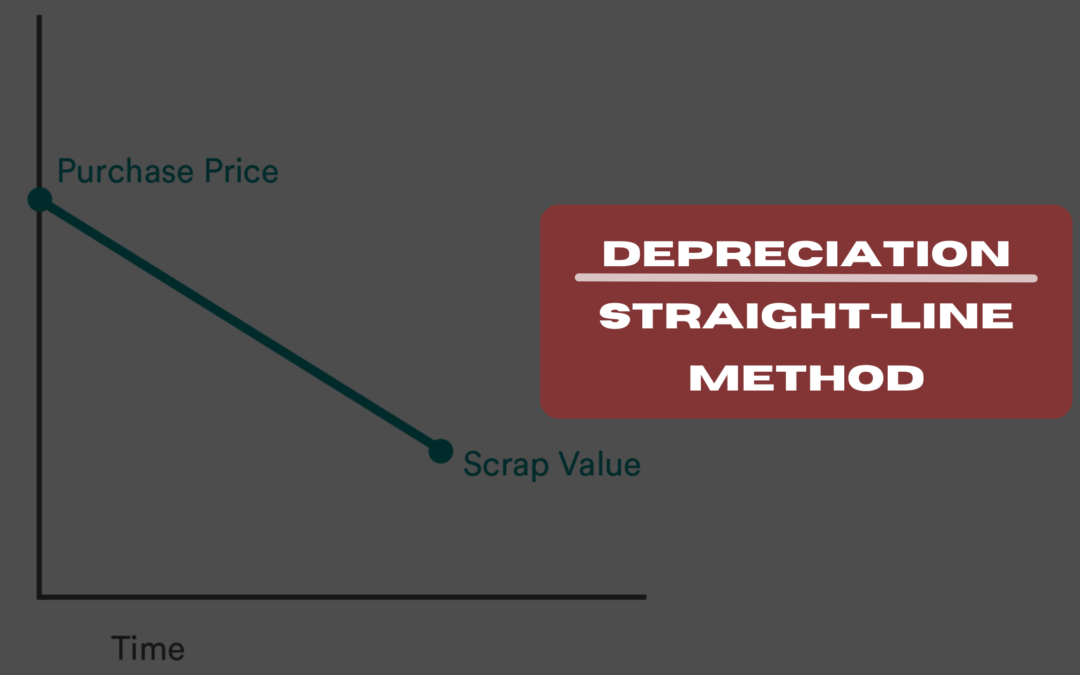
The Straight-Line Method is a depreciation technique that evenly spreads the cost of an asset over its estimated useful life. Here's how it works:
Formula:
[Depreciation = \frac{Cost of Asset - Salvage Value}{Useful Life}]
- Cost of Asset: The initial cost of the asset, including any expenses related to its acquisition, such as delivery and installation.
- Salvage Value: The estimated residual value of the asset at the end of its useful life. This is the amount the asset is expected to be worth when it's no longer in use.
- Useful Life: The anticipated number of years or units of production during which the asset will be used by the business.
An Example in Practice
Let's consider a practical example to illustrate the Straight-Line Method.
Imagine a construction company in India purchases a heavy-duty crane for ₹10,00,000. They estimate that the crane will have a useful life of 10 years and expect to sell it as scrap for ₹1,00,000 when it reaches the end of its operational life.
Using the Straight-Line Method, the annual depreciation for the crane can be calculated as follows:
[Depreciation = \frac{Cost of Asset - Salvage Value}{Useful Life}]
[Depreciation = \frac{₹10,00,000 - ₹1,00,000}{10}]
[Depreciation = \frac{₹9,00,000}{10}]
[Depreciation = ₹90,000 per year]
So, according to the Straight-Line Method, the company will record ₹90,000 as depreciation expense on their financial statements for the crane each year.
Why the Straight-Line Method Matters
The Straight-Line Method is favored by businesses for several reasons:
- Simplicity: It's easy to understand and calculate, making it accessible even for small businesses and individuals.
- Consistency: The depreciation expense remains the same each year, simplifying financial planning and budgeting.
- Equitable: It evenly spreads the cost of the asset's use over its life, making it a fair method for allocating expenses.
However, it's important to note that while the Straight-Line Method is straightforward, it may not always reflect the actual pattern of an asset's depreciation. Some assets may lose value more rapidly in the earlier years, while others may have a more uneven pattern. In such cases, alternative depreciation methods like the Declining Balance Method may be more appropriate.
In conclusion, the Straight-Line Method of depreciation is a fundamental accounting approach used to allocate the cost of an asset evenly over its useful life. It provides a clear and consistent way to account for an asset's decreasing value and is widely used in construction equipment management and financial reporting. Understanding depreciation and its various methods is essential for businesses to make informed financial decisions and plan for the future.
Resource Management, Finance Management, Project Management
Factors and Methods of Depreciation in Construction Equipment
In the world of construction, equipment is the unsung hero, powering the creation of infrastructure, buildings, and landmarks. However, as these mighty machines perform their duties day in and day out, they undergo a natural process known as depreciation. Depreciation is a crucial concept in construction equipment management and financial accounting, affecting a company's balance sheet and decision-making processes. In this article, we will delve into the intricacies of depreciation, exploring what it is, why it happens, and the different methods used to calculate it.
Defining Depreciation
Depreciation refers to the gradual decrease in the value of an asset over its useful life. In the context of construction equipment, it represents the diminishing worth of machinery as it experiences wear and tear, obsolescence, and the passage of time. Depreciation is an accounting method used to accurately reflect an asset's declining value on a company's financial statements.
The Factors Behind Equipment Depreciation
Several factors contribute to the depreciation of construction equipment. Understanding these factors is essential for effective equipment management:
1. Physical Wear and Tear
Why it matters: Construction equipment operates in demanding environments, often exposed to heavy loads, vibrations, and harsh weather conditions. The physical wear and tear resulting from these conditions lead to a gradual deterioration of equipment components, affecting its performance and value.
Takeaway: Regular maintenance and inspections are crucial to mitigate the effects of wear and tear and extend equipment lifespan.
2. Technological Obsolescence
Why it matters: The construction industry continually evolves with advancements in technology. Newer equipment models often come with improved efficiency, safety features, and environmental compliance. As technology progresses, older equipment may become outdated and less competitive.
Takeaway: Staying updated with technological advancements and periodically assessing equipment for obsolescence can help in managing depreciation.
3. Market Demand and Supply
Why it matters: The resale value of used construction equipment is influenced by market dynamics. Oversupply of specific equipment types or reduced demand can lead to lower prices in the resale market, contributing to depreciation.
Takeaway: Keeping an eye on market trends and demand for specific equipment can aid in decision-making regarding equipment acquisition and disposal.
4. Maintenance Costs
Why it matters: Neglecting maintenance or failing to address issues promptly can result in higher repair costs. Inadequate maintenance practices can lead to more extensive damage, accelerating depreciation.
Takeaway: Implementing a proactive maintenance schedule can help control costs and minimize the impact of depreciation.
5. Usage Intensity
Why it matters: Equipment subjected to heavy and continuous use is more likely to experience faster depreciation. High usage leads to increased wear on critical components, shortening their lifespan.
Takeaway: Monitoring equipment usage patterns and ensuring that equipment is allocated efficiently can help extend its lifespan.
6. Equipment Age
Why it matters: Older equipment tends to depreciate faster than newer models. The wear and tear accumulated over the years, combined with the lack of modern features, contribute to reduced value.
Takeaway: Assessing equipment age and planning for timely replacements or upgrades is essential for managing depreciation.
Different Methods for Calculating Depreciation
Several methods are used to calculate depreciation, each with its own advantages and implications. Here are some common depreciation calculation methods:
1. Straight-Line Depreciation
How it works: This method spreads the depreciation expense evenly over the asset's useful life. It is simple to calculate and provides a steady and predictable expense pattern.
Use case: Straight-line depreciation is suitable for assets with a relatively uniform rate of wear and tear.
2. Declining Balance Depreciation
How it works: Declining balance depreciation applies a higher depreciation expense in the early years of an asset's life. It reflects the higher maintenance and repair costs typically associated with older equipment.
Use case: This method is suitable when equipment tends to require more maintenance as it ages.
3. Units of Production Depreciation
How it works: Depreciation is calculated based on the actual usage or production output of the equipment. The more the equipment is used, the higher the depreciation expense.
Use case: Units of production depreciation is ideal for equipment where usage varies significantly.
4. Sum-of-the-Years-Digits Depreciation
How it works: This method accelerates depreciation by assigning higher expenses in the earlier years of an asset's life. It provides a middle ground between straight-line and declining balance depreciation.
Use case: Sum-of-the-years-digits depreciation suits assets that experience moderate wear and tear.
5. Double Declining Balance Depreciation
How it works: A variation of declining balance depreciation, this method doubles the rate of depreciation in comparison to the declining balance method.
Use case: It is used for assets that experience rapid wear and tear, especially in their early years.
6. MACRS (Modified Accelerated Cost Recovery System)
How it works: MACRS is a tax-related depreciation method used in the United States. It assigns specific depreciation rates based on asset types and their useful lives.
Use case: MACRS is primarily used for tax purposes and is specific to U.S. tax regulations.
In Conclusion
Depreciation is an inherent aspect of owning and managing construction equipment. It accounts for the natural wear and tear, technological advancements, and market fluctuations that equipment undergoes over time. By understanding the factors contributing to depreciation and selecting appropriate depreciation calculation methods, construction professionals can make informed decisions about equipment acquisition, maintenance, and replacement.
Effective depreciation management not only ensures accurate financial reporting but also contributes to efficient equipment utilization and cost control in the construction industry. In this ever-evolving field, staying informed and proactive is the key to maximizing the value and longevity of construction equipment.
"The best way to predict your future is to create it." - Abraham Lincoln
Investing in proper equipment management and depreciation strategies is how construction professionals shape a successful future in this dynamic industry.
Project Management, Resource Management
Key factors to consider for Construction Equipment Maintenance
In the world of construction, equipment is the lifeblood of projects. From towering skyscrapers to intricate roadwork, the reliable operation of construction equipment is essential. Yet, every piece of machinery, no matter how robust, requires care and attention to keep it running smoothly. This brings us to the vital topic of evaluating the maintenance needs of construction equipment.
Unveiling the Essentials
Understanding the factors that influence maintenance decisions in construction is akin to mastering the art of preserving your project's lifeline. Here, we unveil the key factors that should never be overlooked:
Factor 1: Usage Patterns
- Why it matters: The frequency and intensity of equipment use play a pivotal role in determining maintenance needs. Equipment subjected to continuous operation or heavy-duty tasks may require more frequent maintenance checks.
- Takeaway: Regularly assess usage patterns to tailor maintenance schedules accordingly, optimizing equipment performance and longevity.
Factor 2: Environmental Conditions
- Why it matters: Where equipment operates matters as much as how often it's used. Harsh environments, such as extreme temperatures or exposure to corrosive substances, can accelerate wear and tear.
- Takeaway: Prioritize maintenance routines that consider the specific environmental challenges equipment faces, ensuring its resilience.
Factor 3: Manufacturer Recommendations
- Why it matters: Equipment manufacturers provide detailed guidelines for maintenance schedules and procedures. Ignoring these recommendations can not only void warranties but also compromise equipment performance.
- Takeaway: Always adhere to manufacturer recommendations to ensure proper care and operation of your equipment.
Factor 4: Age and Equipment History
- Why it matters: Older equipment may have different maintenance needs compared to newer counterparts. Reviewing equipment history can reveal recurring issues and areas of concern.
- Takeaway: Tailor maintenance plans based on equipment age and historical performance, addressing potential problem areas proactively.
Factor 5: Workload Variation
- Why it matters: Equipment subjected to varying workloads may experience different wear patterns. Understanding workload fluctuations helps in planning maintenance effectively.
- Takeaway: Consider workload variations when scheduling maintenance to align with the equipment's actual usage.
"Preventive maintenance is the key to reliability." - Christie Comstock
This quote by Christie Comstock underscores the importance of proactive maintenance in construction equipment. Preventive maintenance, guided by a deep understanding of the factors mentioned above, is indeed the key to ensuring reliability on the job site.
Maximizing Equipment Lifespan
Proactive maintenance isn't just about fixing issues; it's about preventing them in the first place. By addressing maintenance needs promptly, you can significantly extend the lifespan of your construction equipment. This not only protects your investment but also reduces the need for premature replacements.
Minimizing Downtime
Construction projects are all about schedules and deadlines. Unexpected equipment breakdowns can be catastrophic, leading to costly delays. Regular maintenance reduces the risk of sudden failures, minimizing downtime and keeping your project on track.
Safety Assurance
Safety is paramount in construction. Neglecting equipment maintenance can lead to accidents and injuries. Proper maintenance ensures that equipment operates safely, protecting your workers and your project's reputation.
Cost Efficiency
While maintenance comes with a cost, it's a small price to pay compared to the expenses associated with major repairs or equipment replacement. Proactive maintenance is cost-efficient in the long run, preventing expensive breakdowns.
Conclusion
Construction equipment is the backbone of any project, and its reliable operation is essential for success. Understanding the key factors that influence maintenance needs is a critical aspect of construction project management. By considering usage patterns, environmental conditions, manufacturer recommendations, equipment age, and workload variations, you can tailor maintenance plans that ensure equipment reliability, safety, and cost efficiency.
Remember, preventive maintenance is not just a choice; it's a necessity. It's the key to keeping your construction projects running smoothly, on time, and within budget. As Christie Comstock wisely said, "Preventive maintenance is the key to reliability." So, embrace these key factors, and you'll master the art of construction equipment maintenance like a true professional.
In the ever-evolving world of construction, knowledge is power, and maintaining that knowledge ensures the power keeps flowing.
Discover more about construction project management and equipment planning in our series of informative articles.
Project Management, Resource Management
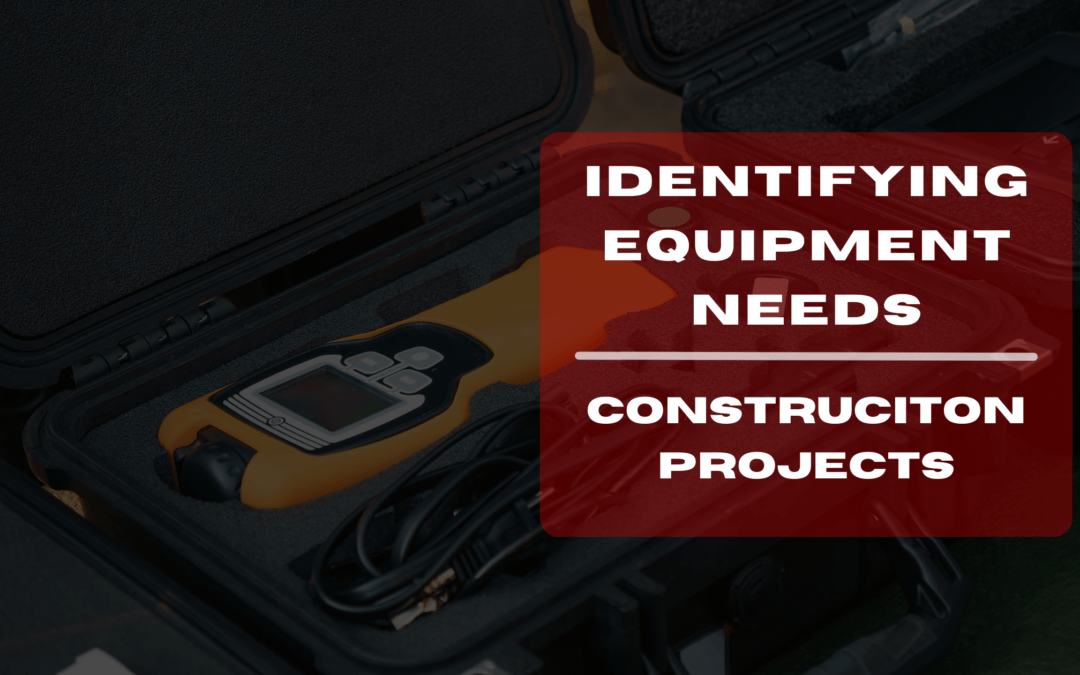
Identifying Equipment Needs in Construction Projects
In the dynamic world of construction, precision is the name of the game. Whether it's erecting skyscrapers, building bridges, or renovating homes, the right equipment can make or break a project. So, how do construction professionals ensure they have the right tools in their arsenal? The answer lies in a meticulous process known as Equipment Needs Analysis. In this article, we'll delve into this crucial aspect of project resource management and explore its significance in project planning.
The Road to Construction Success
Every construction project, regardless of its scale, begins with a vision. From towering structures to infrastructure marvels, every brick and beam is carefully planned. Central to this planning is Equipment Needs Analysis, a systematic process that guides the identification of the necessary equipment for a project. Let's break down the steps involved:
Step 1: Project Assessment
At the heart of Equipment Needs Analysis is a thorough project assessment. This involves diving into the project's details, understanding its scope, objectives, and specific requirements. It's about getting to know the project inside and out. This includes reviewing project plans, blueprints, and technical specifications.
Step 2: Equipment Categorization
With a clear understanding of the project, the next step is to categorize equipment. Construction equipment comes in various shapes and sizes, from earthmoving machinery to heavy lifting cranes. Categorization helps in identifying what types of equipment will be needed to fulfill project tasks efficiently.
Step 3: Quantity Estimation
Quantity matters in construction. Estimating the number of each type of equipment required is a critical step. Factors such as project size, deadlines, and expected workloads come into play here. This step ensures that the project has the right quantity of machinery for each task.
Step 4: Technical Specifications
No two construction projects are exactly alike. Each project has unique demands, and equipment must meet these demands. This step involves specifying the technical requirements for each piece of equipment. Details such as power, capacity, size, and any special features needed are carefully considered.
"Efficiency is doing better what is already being done." - Peter Drucker
This quote by Peter Drucker perfectly encapsulates the essence of Equipment Needs Analysis in construction. It's about doing things better, and in this case, it's about optimizing resource allocation, controlling costs, and ensuring safety.
Optimized Resource Allocation
When equipment needs are accurately assessed, resources can be allocated optimally. Imagine a construction project as a puzzle; each piece of equipment is a puzzle piece. To complete the puzzle efficiently, you need the right pieces in the right places. Accurate equipment assessment ensures just that, minimizing downtime and avoiding resource shortages.
Cost Control
Construction projects come with budgets, and sticking to them is essential. Accurate equipment assessment plays a pivotal role in budgeting. Project managers can estimate equipment-related costs accurately, including purchase, maintenance, fuel, and labor. This control prevents cost overruns, ensuring financial stability throughout the project's lifecycle.
Project Timeline
Time is money in construction, and project timelines are sacrosanct. Having the correct equipment in place ensures that project timelines are met. Delays due to equipment shortages or inadequacy can be avoided, keeping the project on schedule. This not only pleases clients but also enhances the overall reputation of the construction team.
Safety First
In construction, safety is non-negotiable. Accurate equipment assessment enhances safety on the construction site. Having the right equipment for specific tasks reduces the risk of accidents. It ensures that every piece of machinery is up to the task and compliant with safety regulations. A safe work environment is not only a legal requirement but also a moral obligation.
Conclusion
In the world of construction, success is built on a foundation of meticulous planning and execution. Equipment Needs Analysis is the cornerstone of this success. By understanding the project, categorizing equipment, estimating quantities, and specifying technical details, construction professionals ensure they have the right tools for the job.
To paraphrase Peter Drucker, efficiency in construction is doing better what is already being done. Accurate equipment assessment leads to optimized resource allocation, cost control, adherence to project timelines, and enhanced safety. It's the key to unlocking success in construction, ensuring that projects are not just completed but completed with excellence.
In the end, it's not just about bricks and beams; it's about building a better future, one construction project at a time.