Let us understand Solid Waste Management and SWM, particularly in India
Definition:
Solid waste means discarded material including solid, liquid, and semi-solid resulting from domestic, industrial, commercial, Agriculture and Mining operations.
“Municipal solid waste” (MSW) is a term usually applied to a heterogeneous collection of wastes produced in urban areas, the nature of which varies from region to region. The characteristics and quantity of the solid waste generated in a region is not only a function of the living standard and lifestyle of the region's inhabitants but also of the abundance and type of the region's natural resources. Urban wastes can be subdivided into two major components -- organic and inorganic.
The primary difference between wastes generated in Indian cities and those generated in industrialised countries is the higher organic content characteristic of the former.
Organic Waste components of urban solid waste can be classified into three broad categories:
Putrescible: Decomposes rapidly and unless carefully controlled, decompose with the production of objectionable odours and visual unpleasantness.
Fermentable: decompose rapidly, but without the unpleasant accompaniments of putrefaction.
Non-fermentable: Non-fermentable wastes tend to resist decomposition and, therefore, break down very slowly.
Image here
The organic fraction of MSW is an important component, not only because it constitutes a sizable fraction of the solid waste stream in a developing country, but also because of its potentially adverse impact upon public health and environmental quality.
Common Sources of Solid Waste:
Wastes generated by Households, Construction, Commercial, Institutional, Municipal, Industrial, Agricultural activities and Open areas (Sludge, Surface Runoff and Dumping in open areas)
Groundwater contamination by the leachate generated by the waste dump Surface water contamination by the run-off from the waste dump
Bad odour, pests, rodents and wind-blown litter in and around the waste dump Generation of inflammable gas (e.g. methane) within the waste dump
Bird menace above the waste dump which affects the flight of aircraft
Fires within the waste dump
Erosion and stability problems relating to slopes of the waste dump
Epidemics through stray animals
Acidity to surrounding soil and Release of greenhouse gas.
Health problems during the time of segregation of solid waste:
Workers and rag-pickers can be infected during picking of biodegradable and Non-biodegradable waste.
If biodegradable and non-biodegradables or wet and dry wastes are not put separately, it can create a bad odour.
Possible health hazard includes raised level of infant mortality, non-communicable disease such as hand/leg injury by sharp edge material, respirational infections, eye infection.
Communicable diseases such as Diarrhoea & dysentery(due to flies), skin disease.
Solid Waste Management Hierarchy:
Prevent the production of waste, or reduce the amount generated.
Reduce the toxicity or negative impacts of the waste that is generated.
Reuse in their current forms the materials recovered from the waste stream.
Recycle, compost, or recover materials for use as direct or indirect inputs to new products.
Recover energy by incineration, anaerobic digestion, or similar processes.
Reduce the volume of waste prior to disposal.
Dispose of residual solid waste in an environmentally sound manner, generally in landfills
A Municipal Solid Waste Management (MSWM) system includes the following activities:
Setting policies.
Developing and enforcing regulations.
Planning and evaluating municipal MSWM activities by system designers, users, and other stakeholders.
Using waste characterization studies to adjust systems to the types of waste generated.
Physically handling waste and recoverable materials, including separation, collection, composting, incineration, and landfilling.
Marketing recovered materials to brokers or to end-users for industrial, commercial, or small-scale manufacturing purposes.
Establishing training programs for MSWM workers.
Carrying out public information and education programs.
Identifying financial mechanisms and cost recovery systems.
Establishing prices for services, and creating incentives.
Managing public sector administrative and operations units.
Incorporating private sector businesses, including informal sector collectors, processors, and entrepreneurs.
Integrated Waste Management:
It is a frame of reference for designing and implementing new waste management systems and for analysing and optimizing existing systems.
Integrated waste management is based on the concept that all aspects of a waste management system (technical and non-technical) should be analyzed together since they are in fact interrelated and developments in one area frequently affect practices or activities in another area.
Importance of an Integrated Approach:
Certain problems can be more easily resolved in combination with other aspects of the waste system than on their own. Also, the development of new or improved waste handling in one area can disrupt existing activities in another area unless changes are handled in a coordinated manner.
The integration allows for capacity or resources to be optimised and, thus, fully utilised; there are frequently economies of scale for equipment or management infrastructure that can be reached only when all of the waste in a region is managed as part of a single system.
An integrated approach allows for the participation of public, private, and informal sector participants, in roles appropriate for each.
Some waste management practices are more costly than others, and integrated approaches facilitate the identification and selection of low-cost solutions. Some waste management activities cannot bear any charges, some will always be net expenses, while others may produce an income. An integrated system can result in a range of practices that complement each other in this regard.
Failure to have an integrated system may mean that the revenue-producing activities are “skimmed off” and treated as profitable, while activities related to maintaining public health and safety fail to secure adequate funding and are operated at low or insufficient levels.
Purpose of recycling of solid waste:
To Make Environment Clean
Material volume reduction
Toxicity reduction
Conservation of Materials
To Save Energy
Reduce Garbage in Landfills
Reduce pollution
Natural resources conservation
Sound practices for diverting construction and demolition debris from landfill disposal:
Waste prevention can be promoted through inventory control and return allowancesfor construction material. This ensures that unused materials will not get disposed of unnecessarily.
Selective demolition: This practice involves dismantling, often for recovery, of selected parts of buildings and roadways before the main demolition (wrecking) process is initiated.
Onsite separation systems: Using multiple smaller containers at a construction or demolition site to store sorted recyclable materials, as opposed to gross disposal of mixed materials in using a single roll-off or compactor.
Crushing, milling, grinding, and reuse of secondary stone, asphalt, and concrete Materials: These materials can be processed to conform to a number of standards for construction materials. Recovery and reuse of these types of materials are facilitated by the existence of approved specifications for road construction materials and by governmental procurement policies that promote or stimulate the purchase of recyclable materials.
Key steps to making progress in the field of Waste Management:
Responsible planning and design of an integrated MSWM system, which works to reduce the quantity of waste generated and to handle waste in a coordinated fashion. Essential to this is understanding the nature of the wastes generated.
Adoption of new strategies for revenue generation that move away from sole reliance on a government-owned and operated MSWM system. A balanced mix of public and private systems can lead to a waste management system that is more flexible and efficient than a wholly publicly-owned and operating system.
Incorporation of small-scale enterprises and the informal sector into the MSWM system.
Installation of a system of accountability and responsibility at the local level. Residents and businesses can be motivated to act responsibly in MSWM issues. But, most importantly, accountability entails significantly improving the training and capabilities of the managers and planners responsible for the MSWM system.
A Cable Suspension Bridge is a type of bridge in which the deck (the load-bearing portion) is hung below suspension cables on vertical suspenders.
The different components of a Cable Suspension Bridge are mentioned below:
Based on the components described in the diagram, let us understand the different materials used the key components such as Main cable, Suspender Cables, Pylon/ Pier/ Tower, Decking and Stiffening Truss or Girder and Anchorage.
Main Cable:
The main function of cables is to support the deck which carries the traffic loadings and to transfer these traffic loadings to the towers and anchorages by direct tension forces.
Materials used for Main Cable:
Bamboo or Simple Ropes
Wrought Iron Chain Cables
Steel Wire Cables
Galvanised Steel Cables
Twisted/ Spiralled and Galvanised Steel Cables (Helical Shaped Cables wrapped onto a straight centre core wire)
Spiral Bridge Strand
Locked Coil Strand
Parallel Wire Cable
Suspender/ Hanger Cables:
The main function of hangers is to connect the bridge deck and stiffening girder to the main cables. Vertical hangers are used with equal intervals along the span. There are two types of Hanger arrangements that can be created in a suspension bridge based on the connecting ends of the Hanger cables namely: Two-part Hangers (ends are tied to the deck using sockets) and Single part Hangers (ends are tied to the deck using pin connections or simple bearing socket)
Materials used for Suspender/ Hanger Cables:
Steel Wire Ropes (Two-Part Hanger type)
Spiral Strand (Single-Part Hanger type)
Parallel Wires (Single-Part Hanger type)
Pylon/ Pier/ Towers:
The main function of the Tower is to support the main cable. The ends of the main cables are connected to the tower which at a sufficient height to provide cable sag. Tower also supports the stiffening girder and side span. The initial loadings on the tower will be the vertical load acting at the top of the tower, applied by the main cables, together with the loads acting on cable and bridge deck due to wind load and load acting on stiffening girder. The flexible fixed base is provided for the tower and cable saddles are fixed on the top of the tower.
Materials used for Pylon/ Pier/ Towers:
RCC
Concrete
Steel
Wooden Piers
Stone Masonry (For Shallow depths/ heights)
Deck with Truss or Girder:
The main function of the deck is to support the load. The deck is suspended on the main cables by using vertical hangers. The most important load that the deck has to carry is traffic loadings. The self-weight of the deck should be low because the deck is carried by the cables. Stiffening girders should be provided in the deck to transfer the loads from the deck to hanger. Stiffening Truss or Girder also help in reducing the impact of Wind Loads (Swaying)
Materials used for Stiffening Truss or Girder:
Steel Girders or Truss
Wooden Girders and Decks (for short spans)
RCC (Beams) or Girder System
Metal Decking with concrete
Anchorage:
The main function of Anchorage is to support the ends of the main cable and to prevents any movements in the main cable by transferring the force from the main cable to the ground.
Materials used for Anchorage:
Concrete Blocks with Socket/ Hinge points bolted to the ground or with foundation.
GAAP (Generally Accepted Accounting Principles) is a collection of commonly followed accounting rules and standards for financial reporting. The acronym is pronounced gap.
What Are the Principles of Accounting?
The best way to understand the GAAP requirements is to look at the ten principles of accounting.
1. ECONOMIC ENTITY PRINCIPLE
The business is considered a separate entity, so the activities of a business must be kept separate from the financial activities of its business owners.
2. MONETARY UNIT PRINCIPLE
The monetary unit assumption means that only transactions in U.S. dollar amounts can be included in accounting records. It’s important to note that accountants ignore the effects of inflation on the recorded dollar amounts.
3. TIME PERIOD PRINCIPLE
The business activities may be reported in short, distinct time intervals which may be weeks, months, quarters, a calendar year, or a fiscal year. The time interval has to be identified in the headings of the financial statements such as the income statement, statement of cash flow, and stockholders’ equity statement.
4. COST PRINCIPLE
The cost principle mentions the historical cost of an item. This refers to cash or cash equivalent that was paid to purchase an item in the past. This asset amount is adjusted for inflation. The historical cost is reported on the financial statements.
5. FULL DISCLOSURE PRINCIPLE
All information that is relative to the business and is important to a lender or investor must be disclosed in the content of the financial statements or in the notes to the statements. This is the reason that numerous footnotes are attached to financial statements
6. GOING CONCERN PRINCIPLE
This accounting principle refers to the intent of a business to carry on its operations and commitments into the foreseeable future and not to liquidate the business.
7. MATCHING PRINCIPLE
The matching principle requires that businesses use the accrual basis of accounting and match business income to business expenses in a given time period.
For example, the commissions for sales should be recorded in the same accounting period that sales income was made (and not when they were paid).
8. REVENUE RECOGNITION PRINCIPLE
Under the accrual basis of accounting, the revenues must be reported on the income statement in the period in which it is earned. This means that as soon as a product is sold, or the service has been performed, the revenues are recognized. This is regardless of whether the money is received or not.
9. MATERIALITY PRINCIPLE
The materiality principle refers to the misstatement in accounting records when the amount is insignificant or immaterial. Because of the materiality principle, financial statements usually show amounts rounded to the nearest dollar.
10. CONSERVATISM PRINCIPLE
If accountants are unsure about how to report an item, the conservatism principle calls for potential expenses and liabilities to be recognized immediately. It directs the accountant to anticipate the losses and choose the alternative that will result in less net income and/or less asset amount.
What Are the 10 Principles of GAAP?
There are ten principles that can help you understand the mission of the GAAP standards and rules.
1. PRINCIPLE OF REGULARITY
The principle states that the accountant has complied to the GAAP rules and regulations.
2. PRINCIPLE OF CONSISTENCY
The accountants should enter all items in exactly the same way that it has been fixed. By applying similar standards in the reporting process, accountants can avoid errors or discrepancies.
If the standards are changed or updates, the accountants are expected to fully disclose and explain the reasons behind the changes.
3. PRINCIPLE OF SINCERITY
As per this principle, the accountant should provide the correct depiction of the financial situation of a business.
4. PRINCIPLE OF PERMANENCE OF METHOD
The focus of this principle is that there should be a consistency in the procedures used in financial reporting.
5. PRINCIPLE OF NON-COMPENSATION
The full details of the financial information should be disclosed including negatives and positives. This should be done without the expectation of debt compensation by an asset or revenue by an expense.
6. PRINCIPLE OF PRUDENCE
The financial data representation should be done “as it is” and not based on any speculation.
7. PRINCIPLE OF CONTINUITY
The principle assumes that the business will continue its operations in the future.
8. PRINCIPLE OF PERIODICITY
The accounting entries are distributed across the suitable time periods.
9. PRINCIPLE OF FULL DISCLOSURE
While creating the financial reports, the accountants must strive for full disclosure.
10. PRINCIPLE OF UTMOST GOOD FAITH
This principle states presupposes that the parties remain honest in transactions.
Construction project management is the art of tying together various construction tasks, such as planning, organizing, staffing, scheduling, supervising, budgeting, controlling, and closing, while meeting the project specifications. To help project managers make key decisions, construction managers use a number of project management tools. Communication, including project management meetings, is also essential because it keeps everyone on the same page.
State of Construction Industry
The construction industry is the largest industry in the world. Growth in this industry is an indicator of the economic conditions of a country. This is because the construction industry consumes a wide employment circle of labour.
It is more of a service industry than a manufacturing industry. While the manufacturing industry exhibits high-quality products, timeliness of service delivery, reasonable cost of service, and low failure rates, the construction industry is generally the opposite.
Most of the projects exhibit cost overruns, time extensions, and conflicts among parties.
Example of a magnificent project that suffered from huge cost overruns: Sydney Opera House costed about 14 times more than what was initially planned.
The construction industry is more challenging than other industries due to its unique nature. Every project is one of a kind and conflicting parties are always involved.
Thus, a project is defined whether it is in construction or not by the following characteristics:
A defined goal and objective
Specific tasks to be performed
A defined beginning and end
Resources being consumed
The goal of construction projects is to build something. What differentiates the construction industry from other industries is that its projects are large, built on-site and generally unique. It requires money, labour, equipment, and materials as well to complete. In spite of being one of the major economic indicators of a country, the construction industry has long been criticized for the poor performance with respect to many projects failing and or not meeting the expectations. This lack of performance leads to a huge percentage of wastage of the invested money and time.
For example, in the US every 1 billion dollars invested 122 million dollars gets wasted. These failures can be attributed to the challenging nature of this industry.
Another stark example can be seen in China: many construction projects are slowed down considerably due to government anti-corruption efforts. According to China Construction Bank, 15 of 26 of China's top 100 listed companies, including Fosun Group, China Railway Group, China National Machinery Industry Corporation, China Southern Power Grid, and Sinopec, have suffered from asset impairment. The government is trying to tighten control over the investment industry and impose stricter capital controls.
The challenges faced in construction industry:
Hyper-competition
Every project is unique
Involvement of many contracting parties
High risk involved.
To overcome these challenges every project requires clarity in overall vision, goals and objectives. The other reasons for the failures of a construction project such as:
Inaccurate estimate due to miscalculation, specification errors, omissions, excluded permits and changing market conditions.
Scope creep, i.e, the amount of work grows beyond the original agreement.
Unreliable and unskilled labour
Unclear specifications
Communication gap between the parties
Financing issues
Improper planning
This shows that unsophisticated strategic planning makes it difficult in making accurate market predictions and then leads to the project failure. here comes the need for “Construction Project Management” which is defined as “an art and science of coordinating people, equipment, materials, money, and schedule to complete a specified project on time and within approved cost”
One of the most important principles of construction project management is the necessary balance between scope, budget and schedule without compromising on quality. This should be recognized in every project during the early development as well as during design and construction which can turn the project successful.
A Construction Environmental Management Plan describes how activities undertaken during the construction phase of development will be managed to avoid or mitigate negative environmental impacts on-site and how those environmental management requirements will be implemented.
The Construction Environmental Management Plan is a site-specific plan developed to ensure that appropriate environmental management practices are followed during the construction phase of a project.
When undertaking an assessment of a development application or major development, the EPA or a relevant authority may request a CEMP be provided as part of that assessment or may recommend or impose a condition requiring a CEMP be prepared prior to construction commencing.
It is advisable that the CEMP be prepared by a suitably qualified and experienced consultant, particularly when the development is large scale with complex issues.
The Construction Environmental Management Plan should include the following general information about the project:
A description of the site location and the receiving environment, including the location of sensitive receivers.
A description of the project construction works to be undertaken, including timeframes and construction hours.
Identification and analysis of potential environmental impacts, including environmental hazards and risks, proposed mitigation measures, and any residual risks.
Identification and description of the management measures to be implemented to mitigate linked source−receptor−exposure pathways.
Identification of a person or persons with responsibility for implementing the CEMP. ○ The responsible person may be the owner, occupier, contractor, or head contractor for the site. ○ The responsible person or persons should have the authority to call for the immediate cessation of works if an issue arises. ○ The responsible person or persons should have responsibility for managing communications and complaints.
Identification of appropriate reporting and verification measures.
Description of appropriate contingencies to be implemented, if management measures are identified as being ineffective and/or resulting in an environmental nuisance.
Scope of Construction Environmental Management Plan
The scope of the Construction Environmental Management Plan should consider the following subject areas as applicable to the individual project, such as:
Air quality
Water quality and drainage
Noise and vibration
Geology and soils
Landscape and visual impact
Nature conservation
Archeology and cultural heritage
People and communities
Transportation
Materials.
Construction Environmental Management Plan is needed for projects:
Needing EIA screening or clearance.
Significant industrial facilities that e.g. contain manufacturing processes.
Larger residential and commercial development projects.
Any other project deemed by Authority as presenting an environmental risk warranting a CEMP.
The purpose of a Construction Environmental Management Plan can be:
Provide effective, site-specific procedures and mitigation measures to monitor and control environmental impacts throughout the construction phase of the project.
Ensure that construction activities so far as is practical do not adversely impact amenity, traffic or the environment in the surrounding area.
Highlighting stakeholder requirements
Ensuring the development is in compliance with the current environmental legislation.
Outlining the Environment Management Systems as per ISO standards and other applicable standards.
Detailing the mitigation committed to within the Environmental Impact Report / Statement and how it is implemented at the site.
Did you know that the construction industry employs roughly 51 million people and accounts for 9% of the country’s GDP?
And when you combine the unorganized sector and allied services it provides for another 45 million jobs. It is forecasted that over the next few years it is going to add another 16 million jobs to the market.
The irony is that 45% of the construction industry in India is unregulated.
The small and medium scale projects get built without proper construction management leading to wastage and cost overruns.
If you are a fresher or just completing your 12th/ 10+2 education and are wondering which career to move towards then Construction Project Management is one of the best bets to get into and in the process help in the Nation Building process.
To give you a better understanding of what construction project management is, how to enroll, what you’ll study, and what kind of jobs you can get into later in the market...read along.
What is Construction Project Management
Building project management is the construction project management process. However, in contrast with other types of projects, when you talk regarding handling a project, the difference is primarily that the project is mission-based. This means the coordination of the project finishes at the completion of the project building.
According to the Construction Management Association of America (CMAA), construction managers (CMs) oversee the construction of a project.
As construction project management is a highly specialized subject, most of the organizations looking to hire a construction manager or construction project manager would aspire to have candidates with a degree or specialization in this subject.
So it becomes important for you to know what all is needed as prerequisites to take up this course and what you learn in this course. Let's now take a look at it.
Image here
To be able to pursue a speacialation in construction project management in India, you need to be an Architect or a Civil Engineer. However, for a PMP certification course which gives you the ability ot apply for any general management roles you can be a graduate from any field.
What do you learn in the construction project management course?
Construction Project Management course teaches the process of planning, coordination, budgeting and supervision of the construction project.
It is usually a two years masters or PG certification program where you’ll be taught about:
Project Management process (according to PMBOK and APMBOK)
Finance Management
Human Resource Management
Material Management
Machinery Management
Risk management
Health and Safety Management
Construciton Regualatory and Legal Framework understanding
Image here
What are your roles as a Construction Project Manager?
As a construction project manager, you will be expected to manage all the construction activities of a construction project.
The role of a construction project manager broadly includes:
Estimating project costs
Negotiating and controlling project costs
Formulation of budget
Creating and maintaining schedules
Communicating with clients, stakeholders
Coordinating and working with architects, building specialists, regulatory specialists
Managing the construction activities at the site
Managing the resources at site including: workmen, machinery and materials at site
Providing guidance and feedback to all the project governance personnel
Image here
What is the difference between construction management and project management?
A construction manager manages the construction activities of a construction site whereas the project manager manages the overall aspects of the project. The construction project manager manages multiple site activities and plays a consultant role to a project manager.
A construction manager reports to a project manager. A project manager reports to a project director and a project construction manager is consulted by the project manager to govern the construction activities.
A project manager is usually involved from the inception stage of the project and oversees the overall deliverability of the project, whereas a construction manager is involved just before the commencement of construction activity of a project. The construction project manager, however, is involved at the organisational level and provides the direction needed for the project manager to formulate the project.
Image here
Best Construction Project Management Courses in India
Most of the reputed and premier institutes in India offer a PG or a Certification course in Construction Project Management.
A full-time course is preferable to pursue, as it helps with more than just education. The benefits of a full-time course are:
Ability to connect with the industry personnel through seminars and workshops as part of the curriculum.
Alumni status of the institute gives access to the resources and contact of industry personnel to collaborate and grow with
Exposure to live construction sites and projects as part of the curriculum is vital to understanding the industry and its workings thoroughly.
The trend in India as of today signals that a full-time course is given more weightage in comparison to a correspondence course by the hiring agencies. This trend is however gradually shifting towards accepting correspondence courses also with the same enthusiasm as a full-time course.
Project Management Certification courses in India
NICMAR campus offers both full-time and correspondence courses in construction project management. It is the most respected and recognized institute both in and outside India.
IIT’s also have Construction Management, Project Management for Construction, and Construction Project Management degrees being offered.
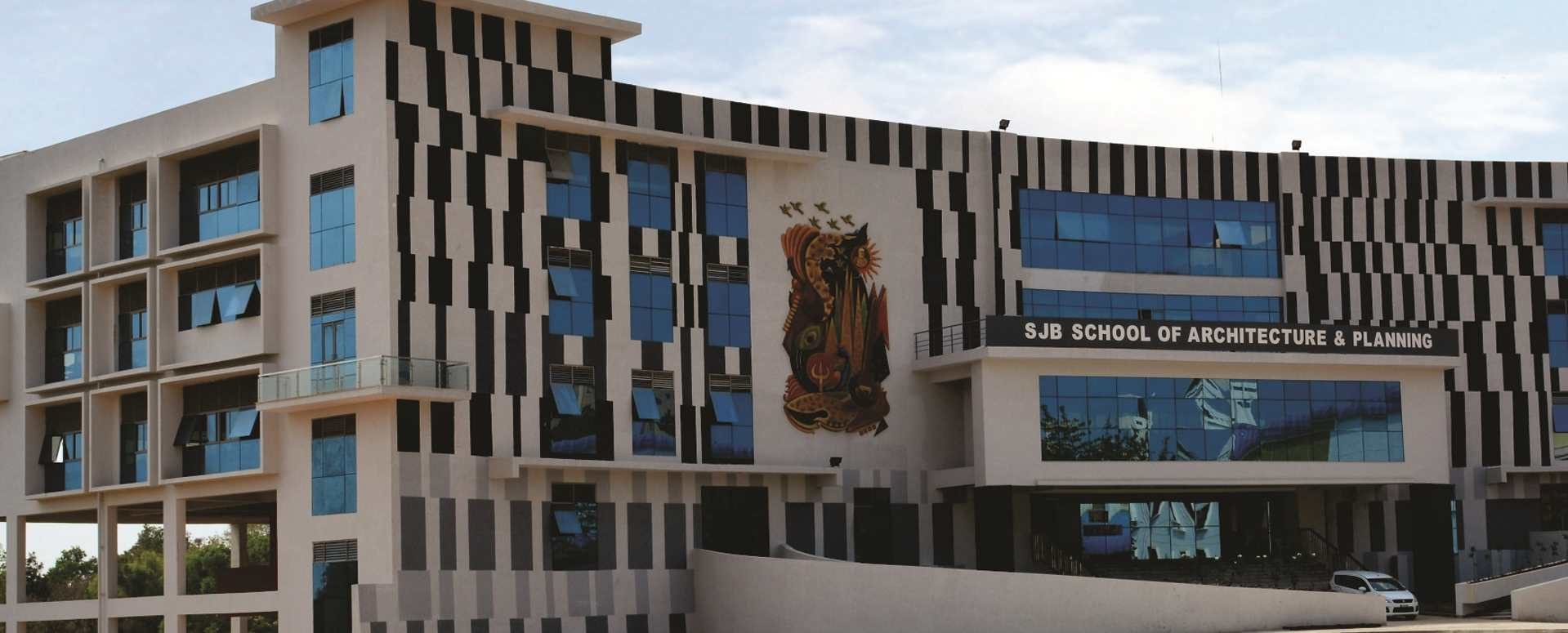
SJB School of Architecture and Planning, Bengaluru
Project Management Certification Online: is it worth it
In reality, a complete Construction Project Management Certification course is not really conducive online as you need to have at least a few practical sessions with onsite (project site) experience to really become a successful construction project manager.
Having said that, NICMAR does offer a correspondence PG Diploma course in Construction Project Management.
Alternatively, there are PMP training certification courses offered by Simplilearn, Unacademy, Udemy, and Coursera which can help you with a general understanding of management principles (PMBOK and APMBOK). You can then take up a diploma course in construction management offered by IGNOU or other universities locally to gain the knowledge needed to fulfill the role of a construction project manager.